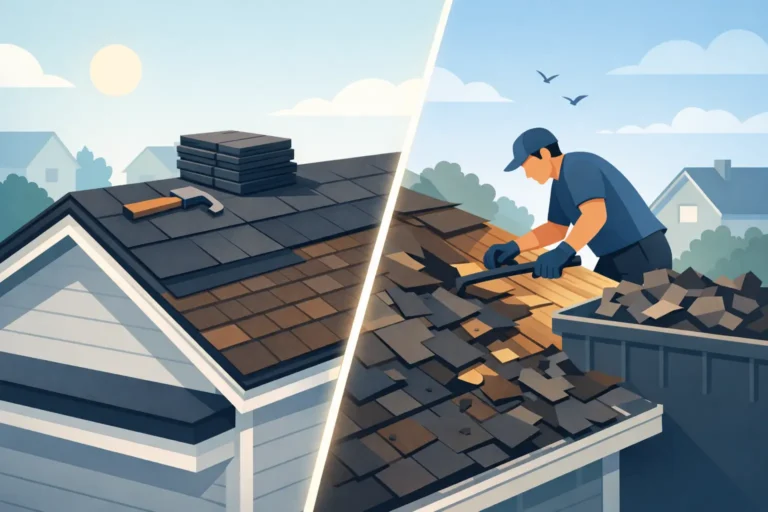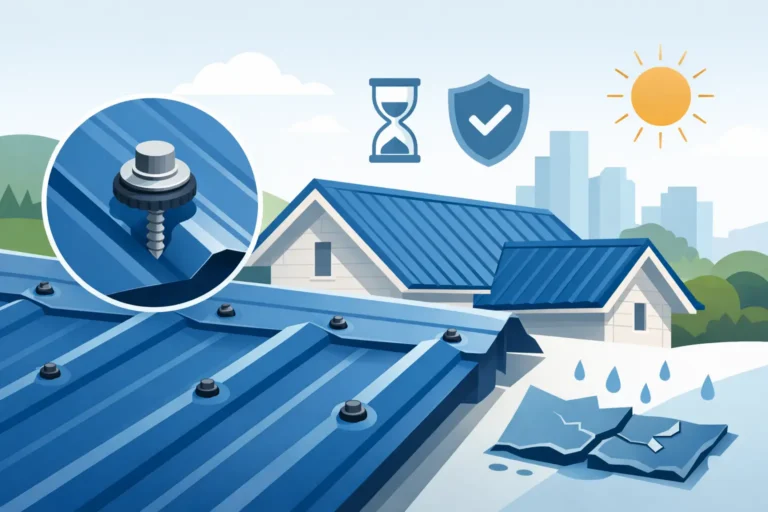


A roof claim can feel confusing when water is dripping into a bedroom or shingles are scattered across the yard. This insurance claim example shows what a typical storm-damage claim may look like, what a roofing contractor can document, and where property owners need to pay close attention before work begins.
Every policy, storm, and roof is different. An inspection cannot promise coverage, and a contractor does not decide what an insurer will pay. Clear documentation and a detailed repair or replacement scope, however, can help you understand the condition of your roof and make informed decisions.
Insurance Claim Example: Hail and Wind Damage
Consider a homeowner in the Durand area after a spring storm with strong wind and hail. The homeowner notices several shingles in the yard, dark marks on the shingles, and a water stain forming on an upstairs ceiling. The roof is 17 years old and had no active leaks before the storm.
The homeowner starts by taking photos from the ground: the missing shingles, fallen branches, ceiling stain, and any damaged gutters or siding. They also make a temporary effort to limit additional water intrusion, such as placing a container under a drip and arranging for a safe emergency covering if needed. Keeping receipts for reasonable temporary protection can matter, but permanent repairs should generally wait until the insurer has had an opportunity to inspect the damage.
Next, the homeowner contacts their insurance carrier to report a date-of-loss claim. The carrier assigns a claim number and schedules an adjuster inspection. The homeowner also requests a free roof inspection from a local roofing contractor that can identify visible storm damage, active leak points, and the roof components affected.
During the roofing inspection, the contractor documents wind-lifted and missing shingles, hail strikes that have displaced protective granules, damaged ridge cap shingles, and compromised flashing near a vent. They also inspect the interior evidence of leakage. The contractor’s role is to provide an accurate assessment of the roof and a line-item estimate for the work required. The insurance company’s adjuster determines coverage under the policy.
When the adjuster visits, the homeowner should be present if possible. Having the contractor available can be helpful when scheduling allows, particularly when there are technical questions about shingle damage, flashing, ventilation, decking, or code-related requirements. It is not about arguing with the adjuster. It is about making sure the inspection considers the full roofing system rather than only the most obvious missing shingles.
What the First Insurance Estimate Might Show
A few days later, the homeowner receives the insurer’s estimate. It may include removal and replacement of damaged shingles on selected slopes, replacement of ridge caps, basic flashing work, and a payment calculation. The estimate may also list depreciation and the policy deductible.
Here is the part that often causes confusion: the first check may not equal the full approved replacement cost. Many policies are written on a replacement cost value basis. Under that type of policy, the insurer may issue an initial payment based on actual cash value, which reflects depreciation. Once completed work is documented, the homeowner may be eligible to recover some or all of the withheld depreciation, subject to policy terms and deadlines.
For example, assume the approved roof scope totals $16,500. The policy has a $2,000 deductible, and the insurer withholds $4,000 in recoverable depreciation. The initial payment could be approximately $10,500. After the work is completed and the final invoice is submitted, the insurer may release the $4,000 depreciation payment if the policy allows it. The homeowner remains responsible for the deductible and any work not covered by the claim.
Those numbers are only an illustration. Coverage may be actual cash value only, depreciation may not be recoverable, and some policies have special deductibles for wind or hail. Read the settlement documents and policy language carefully. If the numbers do not make sense, ask the claims representative to explain the line items before signing a contract.
Comparing the Insurance Scope With the Roofing Estimate
A roofing estimate and an insurance estimate may not match word for word. That does not automatically mean either document is wrong. One may use different measurements, material descriptions, labor units, or assumptions about what must be removed and replaced.
The important question is whether both scopes address the work needed to restore the roof correctly. A detailed contractor estimate should identify the roofing material, tear-off or repair areas, underlayment, flashing, ventilation components, protection of landscaping and exterior surfaces, cleanup, disposal, and warranty information. This level of detail helps prevent surprises once a project is underway.
Some differences need a closer look. If damaged flashing is not included, if the estimate assumes a repair but the surrounding shingles cannot be matched, or if removal exposes deteriorated decking, additional documentation may be needed. A contractor can photograph those conditions and provide a supplement estimate for the insurer’s review. A supplement is not a bonus or an automatic approval. It is a request to consider documented work that was not included in the original scope.
For a commercial low-slope roof, the same principle applies, but the details change. A claim may involve punctured membrane, seam damage, saturated insulation, edge-metal damage, or water intrusion beneath the membrane. The insurer may approve a localized repair while the building owner is considering a broader replacement or restoration plan. In that situation, it helps to separate storm-related covered work from elective upgrades or lifecycle improvements that the owner may choose to fund separately.
Common Mistakes That Create Delays
The claim process usually moves more smoothly when the property owner documents the loss early and keeps decisions organized. Problems often arise when people assume an insurer will pay for an aging roof without clear storm damage, discard damaged materials before they are documented, or start a full replacement before the insurer inspects the property.
Be cautious with anyone who promises to cover or waive your deductible. The deductible is part of your policy obligation, and unclear payment arrangements can create trouble later. Also be careful with contracts that lack a defined scope, cleanup plan, material details, or warranty terms. A storm can create urgency, but urgency is not a reason to accept vague paperwork.
Communication matters just as much. Save the claim number, adjuster contact information, inspection photos, estimates, invoices, and all insurer correspondence in one place. If the carrier requests additional information, respond promptly. If a contractor finds concealed damage during authorized work, ask for photos and an explanation of the recommended repair before approving any added cost.
When a Repair May Be Better Than a Full Replacement
Not every claim leads to a new roof. If wind damage is limited to a small, matchable section and the roof is otherwise in good condition, a focused repair may be the practical choice. It can restore weather protection with less disruption and lower out-of-pocket cost.
A full replacement may make more sense when damage affects multiple slopes, the existing roof is near the end of its service life, matching materials are unavailable, or repairs would leave the system uneven and difficult to maintain. The best answer depends on the roof’s condition, the insurer’s approved scope, the policy, and the long-term needs of the property.
DLR Construction provides detailed roofing inspections and line-item estimates so homeowners and building owners can see what the proposed work includes before moving forward. That clarity is especially valuable when you are comparing an insurance scope with the work needed to protect your property.
A claim does not have to be a guessing game. Start with safe documentation, get a clear assessment of the roof, and ask direct questions about every estimate. The right next step is the one that leaves your home or building protected, your paperwork understood, and no surprises waiting after the storm.