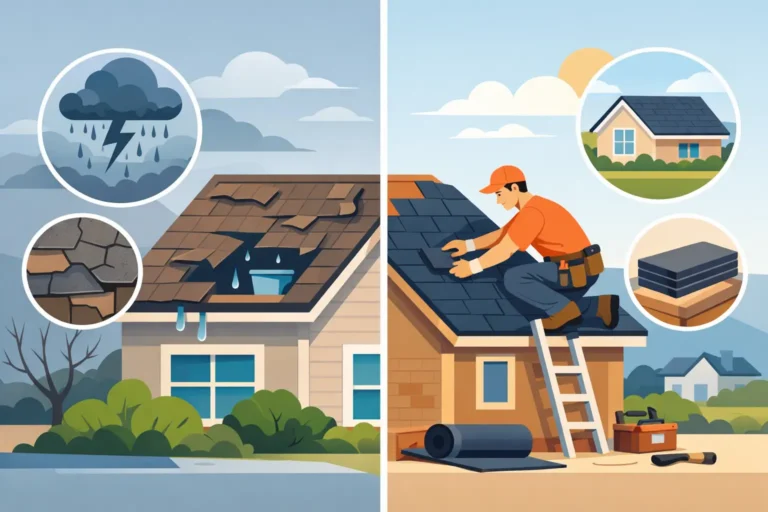


A roof can look fine from the driveway and still be near the end of its useful life. In Michigan, asphalt shingles take a steady beating from snow loads, wind, ice dams, summer heat, and rapid temperature changes. Knowing what those conditions do to a roof helps homeowners act before a small problem becomes interior water damage.
Why Asphalt Shingles Remain a Practical Choice
Asphalt shingles are the most common residential roofing material because they offer dependable weather protection, a wide range of colors and profiles, and a cost that works for many household budgets. When installed as a complete roofing system, they can perform well through the freeze-thaw cycles and storms common across Genesee and Shiawassee counties.
Most homeowners choose architectural shingles rather than older three-tab styles. Architectural shingles have a thicker, layered appearance and generally offer better wind performance and longer manufacturer warranty options. They also provide more visual dimension, which can improve the look of a home without changing its overall character.
The material itself matters, but installation matters just as much. A roof is not simply a field of shingles. It is a system made up of decking, underlayment, ice and water protection, flashing, ventilation, fasteners, starter materials, and ridge caps. If one of those components is missed or installed poorly, the roof may leak or wear unevenly even when the shingles appear to be in good condition.
What Michigan Weather Does to a Shingle Roof
Michigan roofs face conditions that can expose weak spots quickly. Winter brings snow accumulation and repeated freezing and thawing. When heat from the home melts snow on the upper roof, that water can refreeze near cold eaves and create an ice dam. Water trapped behind the ice can work beneath shingles and enter the home.
Proper ice and water protection at vulnerable areas is a key defense, but ventilation and attic insulation also affect the risk. A roofing contractor should look beyond the shingle surface when a homeowner reports recurring ice dams, attic moisture, or stains near exterior walls.
Wind is another concern. Strong gusts can lift loose tabs, break adhesive seals, or expose improperly fastened shingles. After a storm, homeowners should watch for missing shingles, lifted edges, granules in gutters, dented vents, and water spots on ceilings. Hail damage can be harder to identify from the ground because the shingle may remain in place while its protective surface has been bruised or displaced.
Summer heat creates its own stress. High attic temperatures can age shingles faster, particularly when ventilation is restricted. Dark streaks may be algae staining rather than a roof failure, but curling edges, widespread cracking, bald spots, and brittle shingles deserve a professional inspection.
Signs It May Be Time to Replace Asphalt Shingles
Age is useful, but it should not be the only factor in a replacement decision. A roof may need work before its expected service life if it has storm damage, poor ventilation, installation issues, or repeated repairs. On the other hand, an older roof that is dry, secure, and performing well may not need immediate replacement.
A closer look is warranted when shingles are curling, cracking, losing granules, or missing altogether. Granule loss often shows up as a heavy accumulation in gutters or downspouts. Some shedding is normal on a newer roof, but excessive loss later in the roof’s life can leave the asphalt layer more exposed to sunlight and weather.
Interior warning signs matter just as much. A ceiling stain, damp insulation, musty attic odor, or moisture around a bathroom fan does not automatically mean the whole roof has failed. The source could be flashing, a vent penetration, condensation, or a localized leak. Accurate leak detection can prevent a homeowner from paying for a replacement before it is truly necessary.
Repeated repairs are often a different story. If multiple areas are failing, shingles have become brittle, or leaks keep returning after repairs, replacement may be the more sensible long-term investment. A clear inspection should explain why repair is still practical or why replacement is the better path.
What a Quality Shingle Replacement Should Include
No two homes have the same roof layout, decking condition, or drainage challenges. That is why a complete estimate should define the work instead of relying on a single vague price. Homeowners deserve to know what is being removed, what materials are being installed, and what happens if hidden damage is found after tear-off.
A properly planned replacement generally addresses removal and disposal of old roofing materials, inspection of the roof deck, underlayment, protection at eaves and other vulnerable transitions, flashing details, ventilation components, and installation of the selected shingles and ridge materials. Landscaping, siding, driveways, and outdoor areas should also be protected during the work, followed by a thorough cleanup.
Decking is one area where no contractor should make assumptions. Once old materials are removed, deteriorated or soft roof decking may be discovered. A detailed line-item estimate explains how these repairs are handled so the homeowner is not left with a surprise and no clear pricing method.
Flashing deserves special attention. Chimneys, walls, valleys, skylights, and pipe penetrations are common leak locations because water concentrates or changes direction there. Reusing damaged flashing simply because the shingles are new can undermine the entire job. The right approach depends on the condition of each detail, not a one-size-fits-all rule.
Choosing the Right Shingle Color and Style
Color is more than a design decision. It affects how the roof works with brick, siding, trim, and surrounding landscape. A color sample that looks balanced in a showroom can appear much lighter or darker in direct sun. Viewing samples outdoors and considering the home from the street can make the choice easier.
Neutral shades such as weathered wood, charcoal, brown blends, and gray blends remain popular because they coordinate with many exterior colors. A stronger contrast can create a sharper look, while blended tones can soften variations in older siding or masonry. The best choice is usually the one that fits the home and neighborhood without chasing a short-term trend.
Shingle profile is also worth discussing. Architectural shingles offer a dimensional appearance that works well on many Michigan homes. Higher-profile options may create a more pronounced shadow line, but the best value depends on the home’s style, budget, and expected length of ownership.
Repair, Replacement, and Insurance Claims
Storm damage creates pressure to make a quick decision, especially when water is actively entering the home. Start by protecting the property and documenting visible damage, but avoid assuming that every storm requires a full replacement. An inspection can identify whether the issue is limited to a repair area, affects multiple slopes, or may support an insurance claim.
Insurance claims add another layer of detail. A homeowner should understand the scope of covered damage, deductible amount, material specifications, and any items that remain the owner’s responsibility. The contractor’s role is to provide accurate roofing information, document observed conditions, and complete the approved work with clear communication. No one should promise an insurance outcome they cannot control.
For a roof that is simply worn out rather than storm-damaged, a planned replacement is often less stressful than waiting for an emergency leak. It allows time to compare materials, review the scope, schedule work around family needs, and address attic ventilation or flashing concerns at the same time.
Questions to Ask Before Hiring a Roofing Contractor
A good conversation should leave you with fewer unknowns. Ask whether the contractor is licensed and insured, who will oversee the work, how property protection and cleanup will be handled, and what workmanship and material warranties apply. Ask for the scope in writing, including tear-off, disposal, underlayment, flashing, ventilation, and the process for any needed decking repairs.
Local experience also has value. A contractor who works regularly in Durand, Byron, Gaines, Swartz Creek, Howell, Fowlerville, and Williamston understands the weather patterns and housing styles that affect local roofs. DLR Construction has served the area since 1991 with family-operated oversight and detailed estimates designed to make the scope clear before work begins.
If your shingles are aging, damaged, or raising questions after a storm, a professional inspection and free estimate can give you a clear path forward. The right roofing decision is the one based on the actual condition of your home, a defined scope of work, and no surprises when the crew arrives.