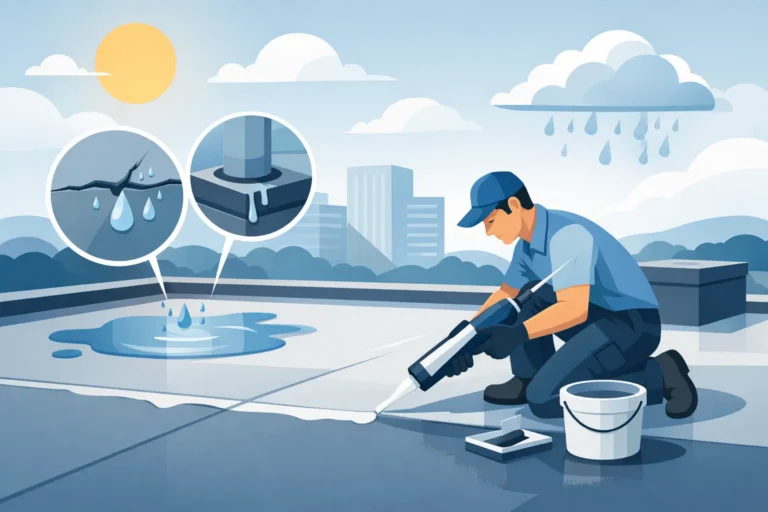


A flat-roof leak rarely waits for a convenient time. Water can find its way through an open seam, cracked flashing, or worn coating and show up over inventory, equipment, or tenant space. The best commercial roof coatings can be a practical answer when the existing roof is still structurally sound, but they are not a shortcut for every aging roof.
For commercial property owners in Michigan, the right decision comes down to the roof’s condition, the material already in place, drainage, and the quality of preparation before any coating is applied. A coating system can extend service life and reduce replacement costs. Applied to a roof with wet insulation, failed seams, or widespread membrane damage, it can simply cover up a problem that will return.
What Makes the Best Commercial Roof Coatings Work?
Commercial roof coatings are liquid-applied systems that cure into a protective, continuous surface over an existing low-slope roof. They are commonly used on qualifying EPDM, TPO, modified bitumen, metal, and built-up roofs. The goal is to seal minor surface defects, protect the roof from sun exposure and weathering, and create a renewed water-shedding surface without removing the entire roof assembly.
The word “best” needs some context. A coating is only as good as its fit for the roof and its installation. The strongest product on paper will not perform well if the roof is dirty, loose seams are left unrepaired, drains are blocked, or the coating is applied too thin.
A dependable restoration plan begins with a close inspection. That includes checking membrane seams, penetrations, flashings, rooftop equipment curbs, drains, edge details, and areas where water tends to stand. If there are active leaks, the source should be identified and repaired before the coating work begins.
The Main Types of Commercial Roof Coatings
Acrylic coatings
Acrylic coatings are water-based and often selected for their bright, reflective finish and cost-conscious installation. They can be a good fit for roofs with positive drainage and a sound substrate. Their reflectivity may help reduce heat absorption during warmer months, which can support more consistent indoor temperatures in some buildings.
The trade-off is standing water. Acrylic systems generally do not perform as well as silicone in ponding-water areas. On a roof where drains are slow or low spots hold water after rain or snowmelt, the drainage issue needs attention before an acrylic coating is considered.
Silicone coatings
Silicone coatings are known for holding up well in areas that experience ponding water. That makes them worth considering for low-slope commercial roofs where improving every low spot is not practical. Silicone also maintains flexibility through changing temperatures, which matters in Michigan’s freeze-thaw conditions.
There are trade-offs here, too. Silicone surfaces can attract dirt over time, which may reduce reflectivity. They can also be more difficult to recoat later unless the surface is properly cleaned and prepared. A contractor should explain the maintenance expectations before recommending this system.
Polyurethane coatings
Polyurethane coatings are tougher and more impact-resistant than many other coating types. They may be a sensible choice around service paths, mechanical units, or roof areas that see regular foot traffic. Some systems use a base coat designed for adhesion and a topcoat that provides weather protection.
These coatings can be an excellent technical solution, but they are not always the lowest-cost option. The condition of the roof and the amount of traffic it receives should justify the added durability.
Asphalt-based and aluminum coatings
Asphalt-based coatings and aluminum coatings have been used on commercial roofs for many years. They can be appropriate in certain maintenance situations, especially on compatible asphaltic roof systems. However, they do not offer the same performance profile as a modern elastomeric restoration system in every application.
The right choice depends on the existing roof assembly, not simply the product that appears least expensive upfront. A lower initial price can become costly if the coating does not adhere correctly or address the actual source of water intrusion.
When Roof Restoration Is the Better Investment
A coating system often makes financial sense when the existing membrane is intact overall, insulation remains dry, and leaks are limited to repairable details. In that situation, restoration can avoid the cost and disruption of a full tear-off while adding years of service to the roof.
It may also be a good option for an owner who needs to manage capital expenses without ignoring roof maintenance. Rather than waiting for a manageable repair to become an interior damage claim, a planned recoating project can protect the building and give the owner a clearer timeline for eventual replacement.
For qualifying flat roofs, an Insta-Coat sealing and recoating system can provide an affordable restoration path. The system should still be treated as a roofing project, not a paint job. Surface cleaning, adhesion testing, seam treatment, flashing repairs, and correct coating thickness all affect the outcome.
A complete replacement is usually the better call when moisture has saturated the insulation, the deck has deteriorated, membrane failures are widespread, or the roof has reached the point where repairs are no longer dependable. Coatings do not correct structural problems below the membrane. A clear inspection should distinguish between a roof that can be restored and one that needs replacement.
How Michigan Weather Changes the Decision
Michigan roofs deal with more than summer sun. They see snow loads, freeze-thaw cycles, wind-driven rain, ice near drains, and periods of standing water during spring weather. Those conditions make drainage and detail work especially important.
A roof coating must be applied during suitable weather conditions and within the manufacturer’s temperature and moisture requirements. Rushing the work ahead of rain or applying a product over a damp surface can affect adhesion and curing. A professional installer plans around the forecast, verifies the roof is dry, and addresses drainage concerns instead of coating over them.
Property managers should also look beyond the field of the roof. Many commercial leaks begin at penetrations, wall transitions, edge metal, drains, and flashing details. These areas need careful preparation and reinforcement because they move and weather differently than the open roof surface.
Questions to Ask Before Approving a Coating Project
A useful estimate should explain what will happen before, during, and after the coating is applied. Ask whether the roof will be moisture-scanned or otherwise checked for wet insulation. Ask which repairs are included, how seams and penetrations will be treated, and what cleaning method will be used.
It also helps to ask about coating thickness. Manufacturers specify a dry-film thickness for a reason. A coating spread too thin may not deliver the expected protection or warranty coverage. The estimate should identify the coating system, preparation steps, protection measures for the property, cleanup, disposal, and warranty information.
Finally, be cautious of any proposal that promises a coating will solve every problem without an inspection. The best commercial roof coatings are part of a system. They work when the existing roof is evaluated honestly and the installer does the detailed repair work that cannot be seen from the ground.
A Practical Path Forward for Your Building
If your low-slope roof is leaking or showing its age, the first question is not which coating has the best marketing. It is whether the roof is a candidate for restoration at all. A local inspection can identify the leak source, evaluate the membrane and insulation, and compare the cost of repair, recoating, and replacement with no surprises.
DLR Construction provides commercial roof inspections and free estimates for property owners who need a clear answer. A sound roof restoration can protect your building for years. When restoration is not the responsible choice, knowing that before money is spent on a temporary fix is just as valuable.