
A commercial roof rarely fails all at once. More often, a small puncture, open seam, blocked drain, or deteriorated flashing lets water work beneath the surface over time. The top commercial roof maintenance tasks are designed to catch those conditions early, while repairs are smaller, less disruptive, and easier to plan into a building budget.
For low-slope TPO and EPDM roofs, maintenance is not just about keeping the roof looking clean. It is about protecting the membrane, insulation, deck, interior finishes, inventory, and daily operations below it. A consistent maintenance plan also gives a property manager clear records of roof conditions, which can be helpful when evaluating restoration, replacement, storm damage, or a warranty concern.
Schedule Professional Roof Inspections Twice a Year
A spring and fall inspection is a practical starting point for most commercial properties in Michigan. Spring inspections identify damage left by ice, snow, freeze-thaw movement, and winter debris. Fall inspections prepare the roof for standing water, wind, and snow load concerns that may arise during the colder months.
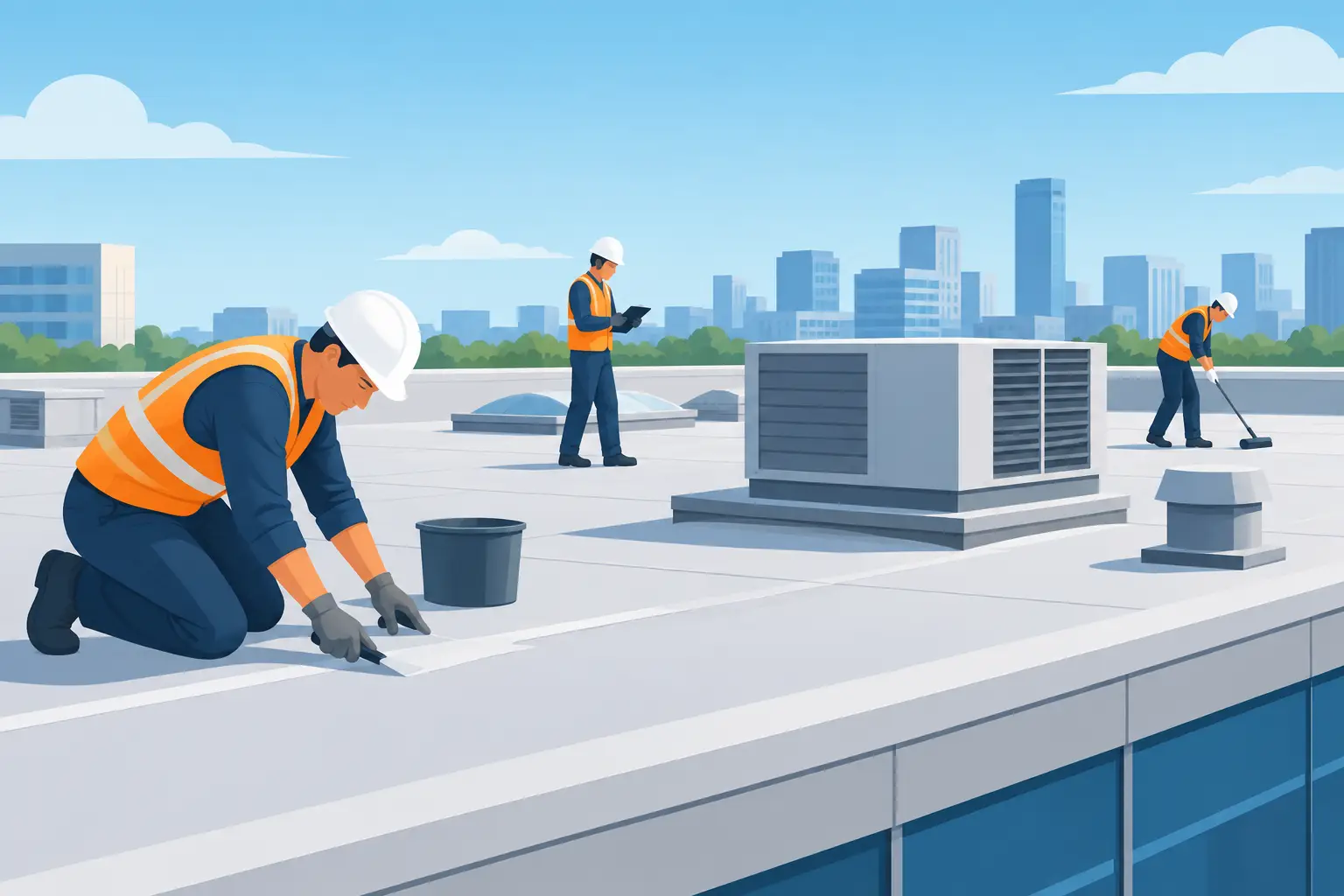
A trained roofer looks beyond obvious leaks. The inspection should include the membrane field, seams, flashing, penetrations, drains, edge metal, rooftop equipment areas, and previous repair locations. The goal is to document what is sound, what needs attention now, and what should be monitored.
The right schedule can depend on the building. A roof with frequent foot traffic, nearby trees, multiple HVAC units, or a history of ponding water may need more than two inspections each year. The same is true for older roofs nearing the point where restoration or replacement needs to be considered.
Keep Drains, Gutters, and Scuppers Clear
Water is expected on a low-slope roof briefly after a storm. It should not remain there for days. Leaves, sediment, tennis balls, packaging, and roof debris can block drains or scuppers and turn a normal rainfall into standing water that stresses seams and flashing.
Have maintenance staff check accessible drainage points after major storms, especially in the fall. They should remove loose debris without dragging sharp tools across the membrane. If drains repeatedly clog, the issue may be larger than housekeeping. The roof may have inadequate drainage, damaged drain components, or low areas that require professional evaluation.
Ponding water does not automatically mean a roof must be replaced. However, it should never be ignored. A roofing contractor can determine whether the membrane remains in good condition and whether repairs, drainage improvements, or a restoration coating are appropriate.
Inspect Seams and Membrane Flashing
TPO and EPDM systems rely on properly installed seams and flashing to keep water out. Temperature swings, building movement, wind, aging materials, and past repairs can all affect these critical details.
During an inspection, look closely at seams that appear lifted, wrinkled, split, or open. Check the membrane where it turns up at parapet walls, curbs, pipes, vents, skylights, and HVAC supports. These transition points are among the most common leak locations because several materials meet there and movement is concentrated.
Property managers should not rely on a quick visual check alone. A seam can look acceptable from several feet away while beginning to separate at an edge. Prompt repair protects the surrounding membrane and helps prevent moisture from getting into insulation, where the full extent of damage may be harder to see.
Address Punctures and Surface Damage Promptly
A low-slope membrane is durable, but it is not meant to absorb every type of abuse. Dropped tools, sharp equipment legs, windblown debris, unauthorized roof access, and service work around HVAC units can create punctures or cuts.
Walk pads are especially valuable where technicians regularly cross the roof to reach mechanical equipment. They protect high-traffic routes and make expectations clearer for anyone servicing rooftop units. If the roof does not have designated pathways, ask a roofing professional whether walk pads can be added without compromising the system.
When damage is found, avoid temporary fixes with incompatible caulk, tape, or coating. Materials that do not bond correctly can trap water, complicate later repairs, and make the actual leak source harder to locate. A proper repair should match the roof system and address the damaged area without creating a new weak point around it.
Check Rooftop Equipment and Penetrations
Commercial roofs often have more penetrations than owners realize. Pipes, conduits, exhaust vents, HVAC curbs, satellite mounts, and other equipment create necessary openings through or above the roofing system. Each one deserves regular attention.
Look for loose fasteners, cracked sealant, deteriorated pipe boots, damaged counterflashing, or equipment supports pressing into the membrane. Also watch for newly installed equipment. A contractor or service company may add a line, bracket, or penetration without coordinating with the roofing contractor, leaving the roof vulnerable.
It is wise to set a roof-access policy for vendors. Anyone performing mechanical, electrical, or communications work should know where to walk, where materials can be placed, and who to contact if they notice roof damage. That small amount of coordination can prevent an avoidable leak.
Inspect Perimeter Edges and Wall Flashing
High winds put pressure on roof edges. Loose edge metal, lifted membrane, failing termination bars, and deteriorated wall flashing can allow wind-driven rain into the roof assembly or lead to more extensive membrane damage during a storm.
This task matters especially after strong wind events. From the ground, a building owner may notice a displaced metal edge or debris at the perimeter, but a close inspection is needed to determine whether the membrane and fastening system remain secure. Do not send untrained staff onto a wet, icy, or unfamiliar roof. Safety comes first.
Document Conditions and Repairs
Good maintenance records make better roofing decisions. Keep inspection reports, photos, repair invoices, leak reports, and notes about when water appeared inside the building. Include the location of the issue, weather conditions, and any work recently performed near that part of the roof.
This documentation helps separate an isolated leak from a recurring problem. It also gives owners a clearer picture of lifecycle costs. If repairs are becoming more frequent across several areas, it may be time to compare continued repair costs with a roof restoration system or full replacement.
A detailed assessment should not push every building toward replacement. If the membrane is generally sound and the roof qualifies, an Insta-Coat restoration system may be a lower-cost way to seal and protect a flat roof while reducing tear-off waste. If moisture has spread through insulation or the roof system has reached the end of its serviceable life, replacement may be the more responsible choice. The condition of the actual roof should drive that decision.
Respond Quickly After Storms and Interior Leaks
Storm checks belong among the top commercial roof maintenance tasks because wind and debris can change roof conditions in a single afternoon. After a severe storm, inspect the property from the ground for fallen branches, displaced materials, clogged drains, and signs of water entering around the roofline. Then arrange a professional inspection when conditions allow.
If a ceiling stain or active leak appears indoors, protect people, inventory, and electrical equipment first. Move contents away from the area, contain dripping water if it is safe to do so, and record the location with photos. Do not assume the water entry point is directly above the interior stain. Water can travel along deck flutes, framing, insulation, or mechanical lines before it becomes visible inside.
For building owners in Durand and surrounding communities, DLR Construction can provide a clear roof assessment and a detailed estimate that explains the recommended scope, repair options, protection measures, cleanup, and warranty information. A local contractor that you can trust should give you straightforward answers, not pressure you into work your roof does not need.
A well-maintained commercial roof gives you time to make decisions on your terms. Schedule inspections before the next season changes, address small defects while they are still small, and keep records that make the next repair, restoration, or replacement decision easier to understand.