

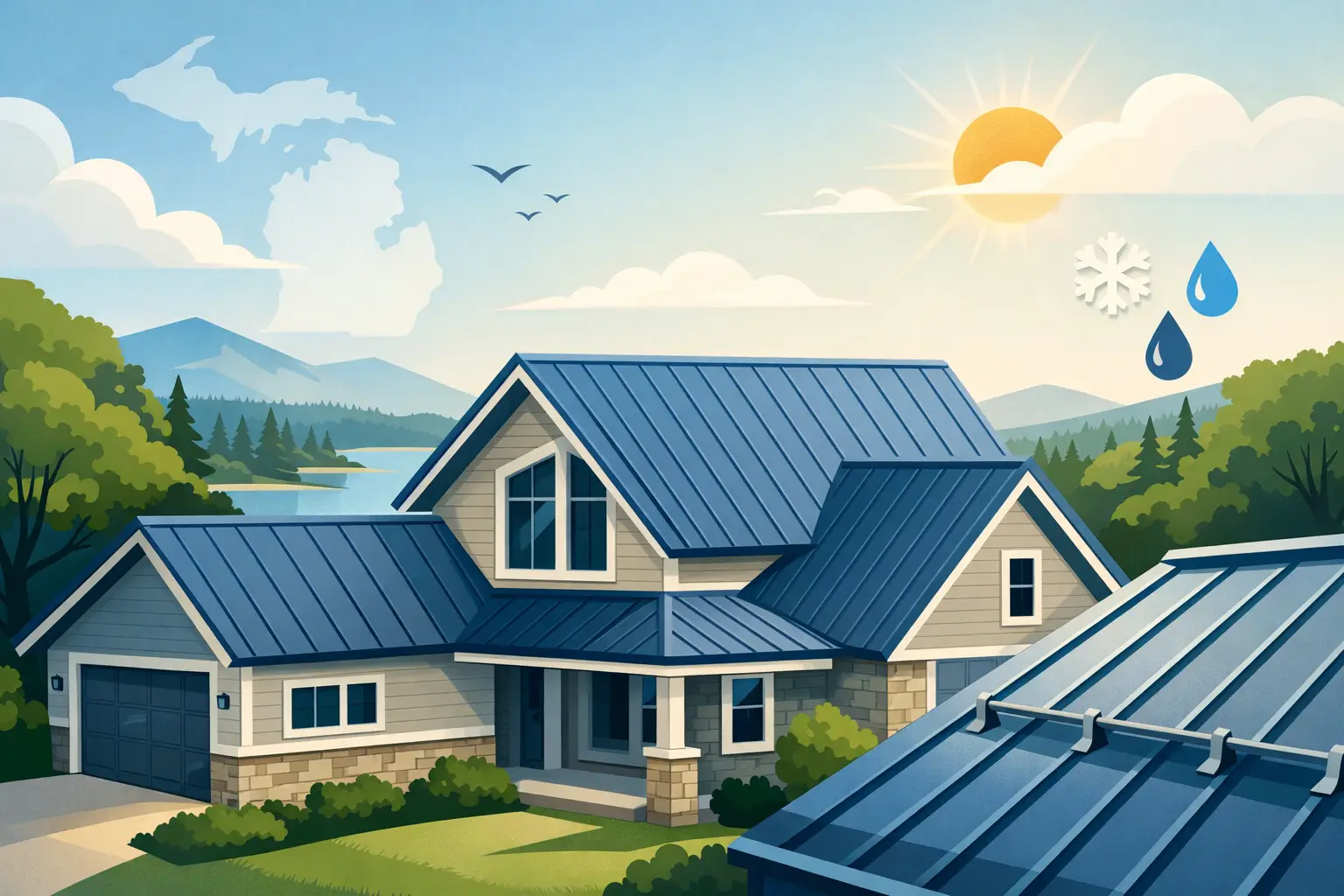
A roof replacement is not just a curb-appeal decision when you live through Michigan wind, heavy rain, snow load, ice, and rapid temperature changes. The standing seam metal roof benefits that matter most are protection from the weather, fewer exposed fastening points, and a long service life when the system is specified and installed correctly. It can be an excellent choice for the right home, but it is not automatically the right choice for every roof or every budget.
What Makes a Standing Seam Roof Different?
Standing seam roofing uses wide metal panels that run from the eave to the ridge. The panel edges lock together at raised vertical seams, which gives the roof its clean, linear appearance. More importantly, the fasteners that secure the panels are generally concealed beneath the seams rather than left exposed to weather.
That design separates standing seam roofing from exposed-fastener panel systems. Exposed-fastener roofs can be a practical, cost-conscious option for certain applications, but their screws and sealing washers remain visible and require periodic attention as the roof ages. With a standing seam system, the visible roof surface has fewer penetration points where water can eventually work its way in.
For lower-pitch residential roofs, DLR Construction installs 26-gauge standing seam panels on roofs with pitches of 6/12 or less. Roof pitch, decking condition, drainage, flashing details, and ventilation still need to be evaluated before a material is selected. A good roofing decision starts with the structure, not just the color sample.
Standing Seam Metal Roof Benefits That Matter Long Term
The strongest argument for standing seam roofing is not one feature. It is the way several features work together over decades of changing weather.
Concealed fasteners reduce common leak points
Every roof penetration requires careful installation. On a typical exposed-fastener panel roof, each screw is a point that depends on a washer to keep out water. Expansion and contraction, sunlight, and time can affect those washers and may create maintenance needs.
Standing seam panels use clips or concealed fastening methods below the panel seams. This does not make the roof leak-proof – valleys, chimneys, skylights, sidewalls, and penetrations still require skilled flashing work – but it reduces the number of exposed fasteners across the main roof field. That is a meaningful advantage for homeowners who want fewer routine maintenance concerns.
Panels can move with temperature changes
Metal expands in warm weather and contracts when temperatures drop. Michigan roofs see plenty of both. A properly designed standing seam system allows the panels to move without forcing that movement through exposed screws.
This detail is easy to overlook, but it matters. A roof is not a static surface. It moves through hot summer afternoons, freezing nights, snow events, and spring thaws. The panel system, clip placement, trim, and fastener pattern need to account for that movement so the roof can perform as designed.
Strong weather performance for exposed homes
Wind-driven rain does not always fall straight down. It can be pushed under weak laps, poor flashing, and aging fasteners. Raised seams and interlocking panel profiles provide a more protected water-shedding surface than many basic panel options.
This can be particularly valuable on homes in open areas around Durand, Byron, Gaines, and nearby communities where wind has a clear path across fields and lots. Still, material alone cannot overcome poor workmanship. Correct underlayment, ice-and-water protection where needed, edge metal, and transition flashing are part of the roofing system, not optional extras.
A clean, architectural appearance
Standing seam roofs have a distinct look: long, straight panel lines with no visible screw pattern. They suit modern farmhouses, contemporary homes, additions, porches, and properties that need a more refined finish than a basic exposed-fastener roof.
Color also changes the result. A darker roof can make the panel lines look crisp and bold, while a lighter color may feel quieter against brick, siding, or natural surroundings. The best choice is usually one that works with the entire exterior, not simply the trend of the moment.
Long service life can improve lifetime value
Standing seam roofing typically costs more upfront than a conventional shingle replacement or an exposed-fastener panel system. The value comes from potential longevity, reduced exposure at fastener locations, and the ability to avoid multiple replacements over the life of the property.
That does not mean every homeowner should choose the highest-cost option. If you expect to sell soon, have major structural repairs ahead, or need to keep the project within a tight insurance settlement, another roofing system may make more financial sense. But for an owner planning to stay in the home, a longer-term roofing investment may be worth a closer look.
Important Trade-Offs Before You Choose
A trustworthy estimate should explain limitations as clearly as benefits. Standing seam roofing has real advantages, but it requires the right conditions and installation process.
The first trade-off is cost. Custom panel work, concealed clips, specialized trim, and detailed flashing generally make standing seam more expensive than standard shingle work. Complex roofs with many valleys, dormers, wall transitions, skylights, or penetrations also take more labor and precision. A simple gable roof is usually more straightforward than a roof with multiple intersecting sections.
Noise is another common question. Rain noise is often overstated. When panels are installed over proper decking, underlayment, and attic insulation, most homeowners do not experience a dramatic difference indoors. An open structure, such as a detached outbuilding with limited insulation, may sound different than a finished home.
Condensation must also be considered. It is controlled through correct roof assembly, ventilation, insulation, and underlayment choices. Condensation is not solved by choosing a panel color or adding a surface layer after the fact. It needs to be addressed during planning, especially where attic ventilation is inadequate or where an existing roof has signs of moisture problems.
Finally, installation expertise matters greatly. A standing seam roof is not simply panels placed on a roof deck. The crew must properly prepare the deck, install the underlayment, lay out panels, manage panel movement, form trim details, and flash every transition. A low bid that leaves out protective measures, removal, cleanup, disposal, or warranty details can become expensive later.
When Standing Seam Is a Good Fit
Standing seam roofing is often a strong choice for homeowners who want a long-term roof, prefer a clean architectural appearance, and are willing to invest in a system with fewer exposed fastening points. It can also be a practical option for lower-pitch residential roof sections when the correct panel profile and drainage details are used.
It may not be the best fit when the project budget is the primary concern, the roof requires significant deck or structural work first, or the owner needs a more economical replacement option. Asphalt shingles remain a dependable choice for many Michigan homes, particularly when a lifetime-warranty shingle system better matches the property and budget.
The right answer depends on the roof in front of you. A complete inspection should look beyond visible wear to evaluate soft decking, existing leaks, flashing failures, ventilation, roof pitch, drainage, and storm damage. If an insurance claim is involved, clear documentation of damage and scope can help reduce confusion while the claim is being reviewed.
What to Expect From a Clear Roofing Estimate
Before committing to a standing seam project, ask for a line-item estimate that states exactly what is included. You should understand whether the existing roof will be removed, how the property will be protected, what underlayment and flashing work are planned, how damaged decking is handled, and who is responsible for cleanup and disposal.
It is also reasonable to ask about panel gauge, finish, trim, warranty coverage, and how the contractor handles details around chimneys, walls, vents, and valleys. These are not small details. They are where long-term roof performance is decided.
DLR Construction provides free estimates designed to give homeowners clear scope and no surprises. A family-owned local contractor should be able to explain the work in plain language, answer questions directly, and stand behind the installation after the crew has left.
A standing seam roof deserves a decision based on your home’s condition, your plans for the property, and the quality of the installation – not a quick sales pitch. A careful inspection and a detailed estimate give you the information needed to choose with confidence.