
A roof can look good from the driveway while small problems are developing at every exposed screw. That is why exposed fastener metal roof lifespan is not just about the panels themselves. It depends on the fasteners, sealing washers, flashing details, roof slope, weather exposure, and whether minor concerns are handled before water reaches the roof deck.
For many Michigan homes, an exposed-fastener metal roof can provide roughly 20 to 30 years of service, and sometimes longer with proper installation and maintenance. That range is useful for planning, but it is not a promise that every roof will perform the same way. A well-installed roof on a straightforward building may outlast the average. A roof that faces repeated ice buildup, wind-driven rain, poor drainage, or neglected fasteners may need repairs much sooner.
What Determines Exposed Fastener Metal Roof Lifespan?
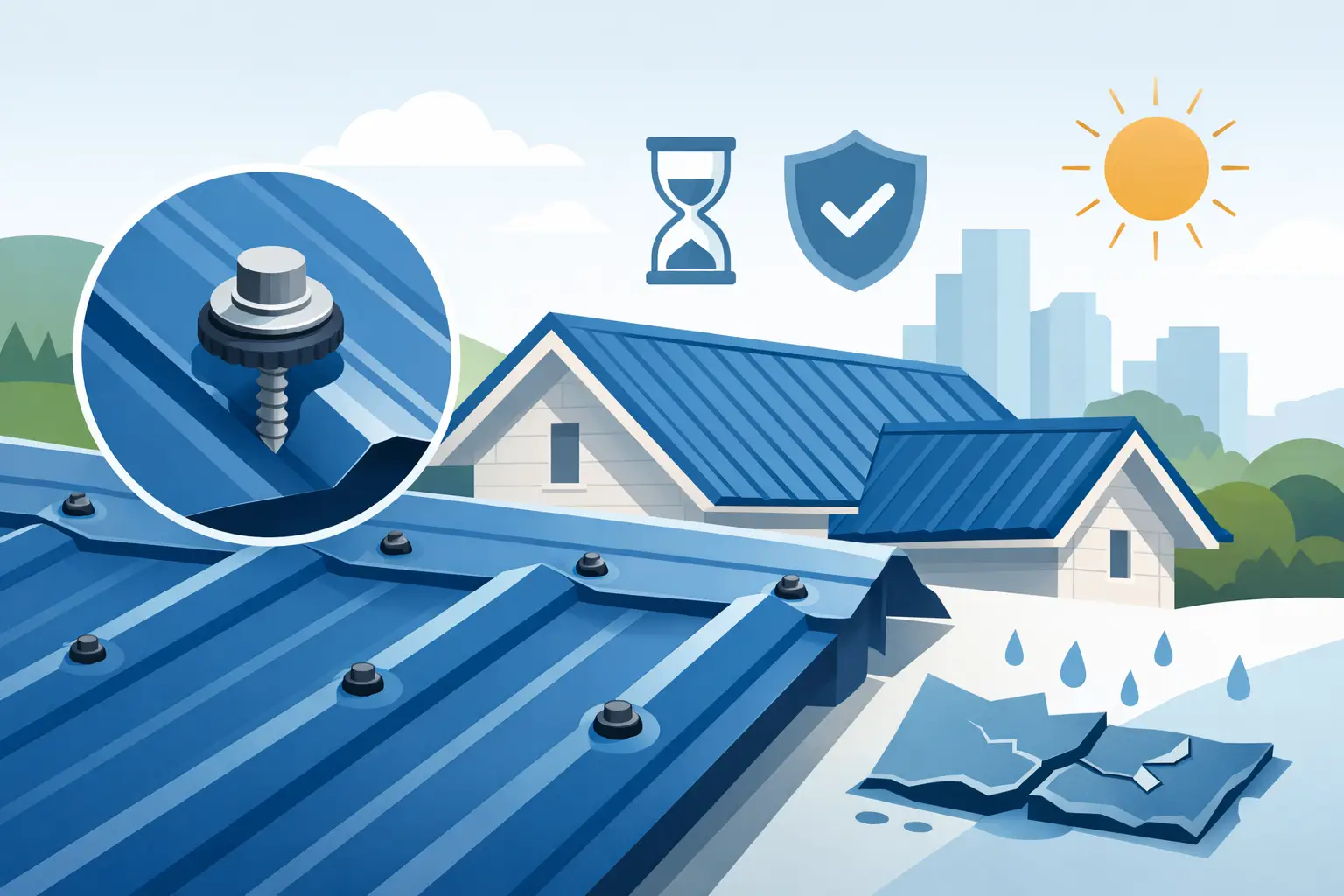
Exposed-fastener systems use metal panels secured directly to the roof structure with visible screws. Each screw has a sealing washer designed to keep water out at the penetration point. This makes the system a practical, cost-conscious option for the right roof, but it also means the fasteners are a long-term maintenance item.
Sunlight, temperature swings, snow, wind, and vibration gradually affect those washers. Over time, a washer can dry out, compress, crack, or lose its tight seal. Fasteners can also back out slightly as the roof expands and contracts through Michigan’s seasonal changes. One loose screw is usually a straightforward repair. Dozens of aging fasteners across a roof signal that a closer inspection is due.
Panel quality and protective finish matter as well. A durable finish helps resist fading and surface deterioration, but no finish can compensate for poor installation. Panels must be correctly lapped, trimmed, and flashed around chimneys, walls, valleys, vents, and transitions. Water almost always finds the weak detail, not the strongest section of a roof.
Installation Quality Sets the Starting Point
A roof’s expected life begins on installation day. Fasteners must be placed in the correct location, driven straight, and tightened to the proper pressure. An overtightened screw can crush the washer. An undertightened screw may leave a gap. A screw driven at an angle can distort the washer and create a small path for water.
Roof preparation is equally important. The deck should be evaluated for soft areas, moisture damage, and unevenness before new panels are installed. Proper underlayment, edge details, and flashing are not optional extras. They are the parts that protect the structure when snow melts, rain is pushed uphill by wind, or ice holds water near an edge.
This is one reason a detailed line-item estimate matters. Property owners should know whether the scope includes tear-off or installation over an existing roof where appropriate, deck repairs if needed, underlayment, flashing, cleanup, disposal, and warranty information. Clear scope helps prevent surprises later.
Michigan Weather Can Shorten or Extend Service Life
In Durand and surrounding communities, roofs deal with more than ordinary rainfall. Freeze-thaw cycles can work on fasteners and sealants all winter. Snow loads can reveal drainage issues. Ice dams can force water where it does not normally travel. Summer heat then causes expansion across the panels and fasteners.
A roof with adequate slope, clear drainage paths, and well-designed flashing is better positioned to handle those conditions. Low-slope roofs require particular care because water moves more slowly and can remain near laps, penetrations, or transitions longer after a storm. The panel profile and installation approach must be appropriate for the roof’s pitch and the manufacturer’s requirements.
Trees are another local factor. Branches rubbing against panels can wear the finish, while leaves and debris can trap moisture in valleys and behind penetrations. Keeping the roof surface and gutters clear is simple maintenance that can prevent avoidable trouble.
The Fasteners Usually Need Attention Before the Panels
The panels often remain serviceable after the original screws and washers begin to age. That distinction is important. A leak does not automatically mean the entire roof needs replacement.
In many cases, a qualified roofing contractor can identify loose, damaged, or improperly seated fasteners and replace them with compatible repair fasteners. Flashing can be resealed or rebuilt where needed. Isolated panel damage may also be repairable. Addressing these issues early can add useful years of service and protect the deck from more expensive water damage.
However, a fastener replacement program is not the right answer for every roof. If there is widespread corrosion, repeated leaks at multiple details, extensive panel damage, or soft decking beneath the panels, the roof may be nearing the point where replacement is the more responsible choice. The right decision comes from an inspection, not a guess based only on age.
Warning Signs Your Roof Needs an Inspection
You do not need to climb onto the roof to spot every concern. After a heavy rain or rapid snowmelt, look in the attic for damp insulation, water staining, or a musty smell. Inside the building, ceiling spots, peeling paint, and unexplained discoloration deserve prompt attention.
From the ground, watch for lifted panel edges, missing or visibly crooked screws, loose trim, sagging gutters, or discoloration around penetrations. A sudden increase in leaks around a chimney, vent, or roof-to-wall connection can point to failed flashing rather than a panel problem.
It is also wise to schedule an inspection after a significant wind or hail event. Damage may be subtle at first, especially around exposed screws and seams. Waiting until water enters the building can turn a manageable repair into deck replacement, insulation damage, or interior repairs.
Maintenance That Helps an Exposed-Fastener Roof Last
An exposed-fastener roof does not require constant work, but it should not be ignored for years at a time. A professional inspection every year or two, plus an inspection after severe storms, gives problems a chance to be corrected early.
Property owners can support that effort by keeping gutters and roof valleys free of debris, trimming branches that scrape the roof, and addressing interior leak signs immediately. Avoid walking on the panels unless necessary. Foot traffic can damage finishes, bend panel ribs, or affect fastener seals when weight is placed in the wrong area.
Do not apply random caulk to every visible screw as a do-it-yourself fix. Surface sealants may temporarily hide a problem while trapping moisture or making proper repairs more difficult. A roofing professional should determine whether a screw needs tightening, replacement, or a different repair at that location.
Repair or Replacement: How to Decide
Age is one part of the decision, but the pattern of problems matters more. A roof that is 15 years old with a few isolated loose fasteners may be a good repair candidate. A roof of the same age with recurring leaks, deteriorated washers throughout, poor original flashing, and water-damaged decking needs a more thorough evaluation.
Consider the building’s plans, too. If you expect to sell soon, a documented inspection and targeted repair may be appropriate when the roof is otherwise sound. If you plan to stay long-term, replacing a system with widespread issues can offer more predictable protection and fewer repair calls.
DLR Construction provides free estimates with a clear explanation of what is found, what can be repaired, and when replacement should be considered. For homeowners and property managers, that direct assessment is more useful than being pushed toward a one-size-fits-all answer.
When your roof has reached the age where questions start piling up, do not wait for the next ceiling stain to provide the answer. A timely inspection can clarify the condition of the fasteners, panels, flashing, and roof deck – and give you a practical plan with no surprises.