
A low-slope roof can look worn long before it has reached the end of its useful life. It can also look acceptable while moisture is quietly moving through insulation or a weakened seam. That is why commercial roof restoration vs replacement should begin with an inspection, not a quick decision based only on age or the number of leaks.
For building owners and property managers, the right choice affects more than the immediate budget. It affects tenant disruption, energy use, maintenance demands, warranties, and the risk of a small roof issue becoming interior damage. A restoration can be an excellent value when the existing system is structurally sound. A replacement is often the more responsible investment when the roof has widespread failure or hidden moisture.
Commercial Roof Restoration vs Replacement: The Core Difference
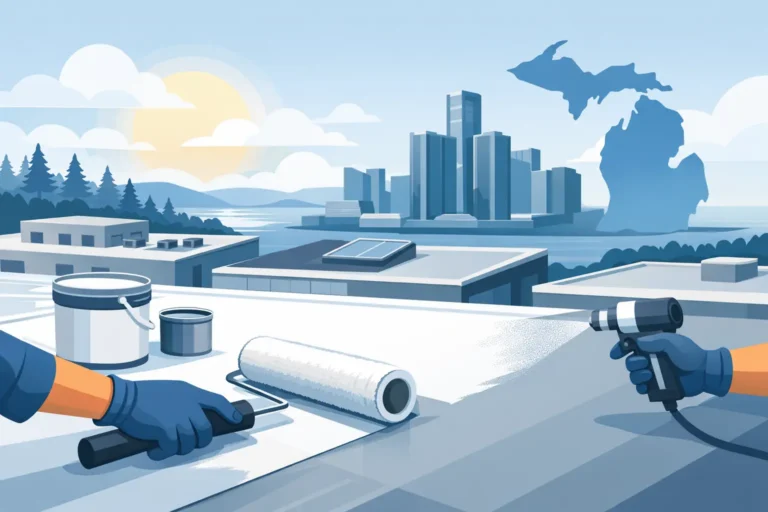
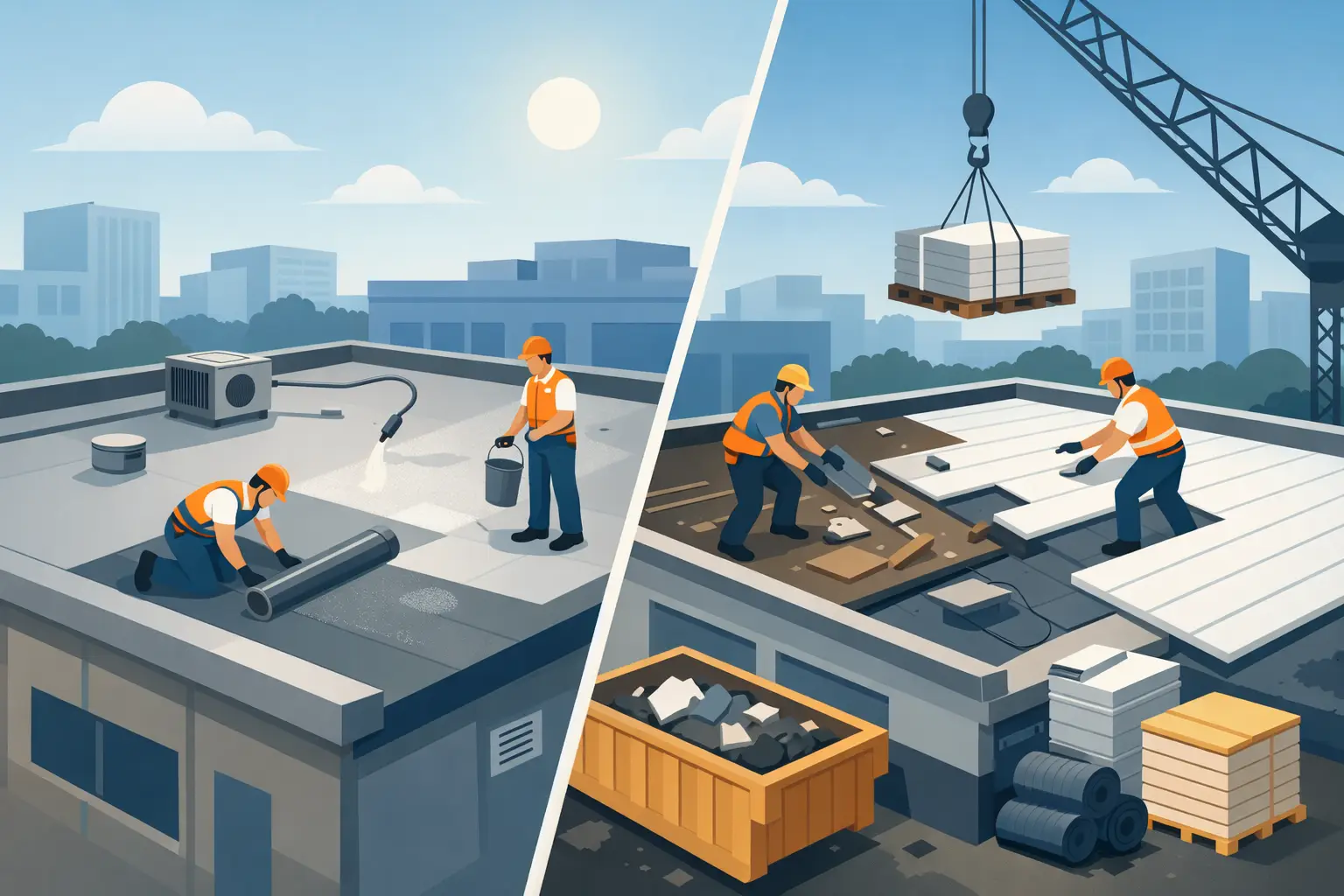
Commercial roof restoration typically means cleaning, repairing, and recoating an existing low-slope roofing system. The work may include sealing seams, addressing penetrations, reinforcing vulnerable areas, repairing isolated membrane damage, and applying a fluid-applied coating system across the roof surface. With the right preparation, a coating such as Insta-Coat can renew weather protection without removing the entire existing roof.
Replacement involves installing a new roof system, commonly after a complete tear-off of the old membrane and, when needed, wet insulation or damaged substrate materials. A replacement gives the contractor access to conditions below the roof surface and creates a fresh system with new membrane, flashings, and details around drains, curbs, and penetrations.
Neither option is automatically better. Restoration preserves a roof that still has useful life. Replacement addresses a system that can no longer reliably protect the building.
When Restoration Is a Smart Commercial Roofing Option
Restoration is often worth considering when a roof has surface aging but remains dry and stable underneath. For example, an EPDM or TPO roof may have oxidation, minor seam concerns, faded surfaces, or localized damage that can be repaired before a coating is installed. If insulation is dry, the roof deck is sound, and leaks are limited to repairable details, restoration can extend service life at a lower upfront cost than a full replacement.
The reduced disruption matters, too. Restoration usually produces less tear-off debris, requires fewer dumpsters, and can shorten the active construction period. That can be helpful for occupied offices, retail buildings, warehouses, and facilities where daily operations need to continue.
A reflective coating may also reduce heat absorption during warmer months. Energy savings vary by building design, insulation, HVAC equipment, and the roof’s exposure, so they should be viewed as a possible benefit rather than the only reason to restore.
A Coating Is Only as Good as the Preparation
Roof coatings are not a shortcut for unresolved roof failure. The roof must be cleaned correctly, loose materials must be removed, seams and penetrations must be repaired, and areas with ponding water or substrate concerns need to be evaluated before coating begins.
A coating applied over trapped moisture, deteriorated insulation, open seams, or widespread membrane breakdown may hide problems temporarily instead of correcting them. The roof may look new from the ground while damage continues below the surface. A dependable contractor should explain what will be repaired before coating, what the coating system is designed to do, and what conditions may limit its warranty or expected life.
Signs Replacement May Be the Safer Choice
Replacement becomes the stronger option when roofing problems are widespread, recurring, or tied to the materials below the membrane. If leaks keep appearing in different areas after repairs, the roof may have reached the point where patching is no longer cost-effective.
Moisture trapped in insulation is another major concern. Wet insulation loses its insulating value and can allow deterioration to continue out of sight. A qualified inspection may include moisture testing or other diagnostic steps to determine whether the roof can be restored or whether affected materials need to come out.
Replacement should also be considered when the existing membrane has extensive cracking, shrinkage, seam failure, splitting, or damage around flashings and rooftop equipment. In those cases, repairing one section may simply shift attention to the next weak point. A complete tear-off allows the roofing crew to inspect the deck, replace damaged materials, correct drainage-related trouble areas where practical, and install a properly detailed TPO or EPDM system.
Compare the Cost You Can See With the Cost You Cannot
The initial cost of restoration is usually lower than replacement because it avoids much of the demolition, disposal, and material cost associated with a tear-off. That can make restoration an appealing choice for a building owner managing a tight capital budget.
But the lowest initial price is not always the lowest long-term cost. A restoration that is performed on a suitable roof can delay replacement and provide strong value. A restoration used on a roof with extensive moisture damage may lead to repeat leak repairs, interior damage, business interruptions, and an eventual replacement anyway.
Replacement costs more upfront, but it can offer a more complete reset when the existing system has failed. It also allows the owner to address concealed conditions that a coating cannot reach. The practical question is not simply, “Which option costs less today?” It is, “Which option gives this building the most dependable protection for the money being spent?”
Michigan Weather Makes Details Matter
Commercial roofs in Durand and surrounding communities deal with freeze-thaw cycles, wind-driven rain, snow loads, ice, and periods of standing water. These conditions put added stress on seams, drains, edge details, and penetrations such as vents and HVAC curbs.
A roof with minor wear may still be a good restoration candidate if drainage is functioning and the membrane remains secure. However, repeated ice-related movement, persistent ponding, or leaks at multiple penetrations can point to a more involved problem. The inspection should focus on where water is entering, how it travels, and whether the roof system below the visible surface is still dry.
What a Useful Roof Assessment Should Answer
A useful estimate should do more than provide one number. It should identify the roof system, describe the observed issues, and explain whether restoration or replacement is recommended and why. It should also clarify the planned scope of repairs, surface preparation, protection of the property, cleanup, disposal, and warranty information.
Ask whether the estimate accounts for damaged insulation or decking if those conditions are discovered. Ask how seams, penetrations, drains, and ponding areas will be handled. If restoration is proposed, ask what repairs are included before the coating is applied. If replacement is proposed, ask whether it includes a tear-off and how the new membrane system will be detailed.
Clear answers prevent surprises after work begins. They also make it easier to compare proposals fairly, since two estimates with similar prices may include very different levels of preparation, repairs, and warranty coverage.
Do Not Let an Active Leak Make the Decision for You
An active leak needs prompt attention, but urgency should not force a building owner into the wrong long-term plan. In many cases, a targeted repair can stop water entry while the full roof condition is evaluated. That gives you time to make a decision based on evidence instead of frustration after a storm.
DLR Construction LLC approaches commercial roofing decisions with that practical mindset: inspect the roof, explain the condition plainly, and provide a detailed estimate for the work that fits the building. A roof that can be responsibly restored should not be replaced just because replacement is more extensive. A roof that has failed beyond restoration should not be coated simply because coating costs less at the start.
The best next step is a thorough roof assessment before the next small leak has a chance to become a larger building problem.