
A roof that is near the end of its life presents a decision many property owners did not expect to make: roof overlay versus tearoff. An overlay can look like the lower-cost, faster answer because new roofing is installed over the existing roof. A tearoff removes the old material first, exposing the roof deck and allowing the new system to start clean. The right choice depends on what is underneath the surface, not just what is visible from the driveway.
For homeowners and commercial property managers in Michigan, that distinction matters. Ice, wind-driven rain, past repairs, trapped moisture, and aging materials can turn a seemingly simple replacement into a project where proper inspection protects the building for years to come.
What Is a Roof Overlay?
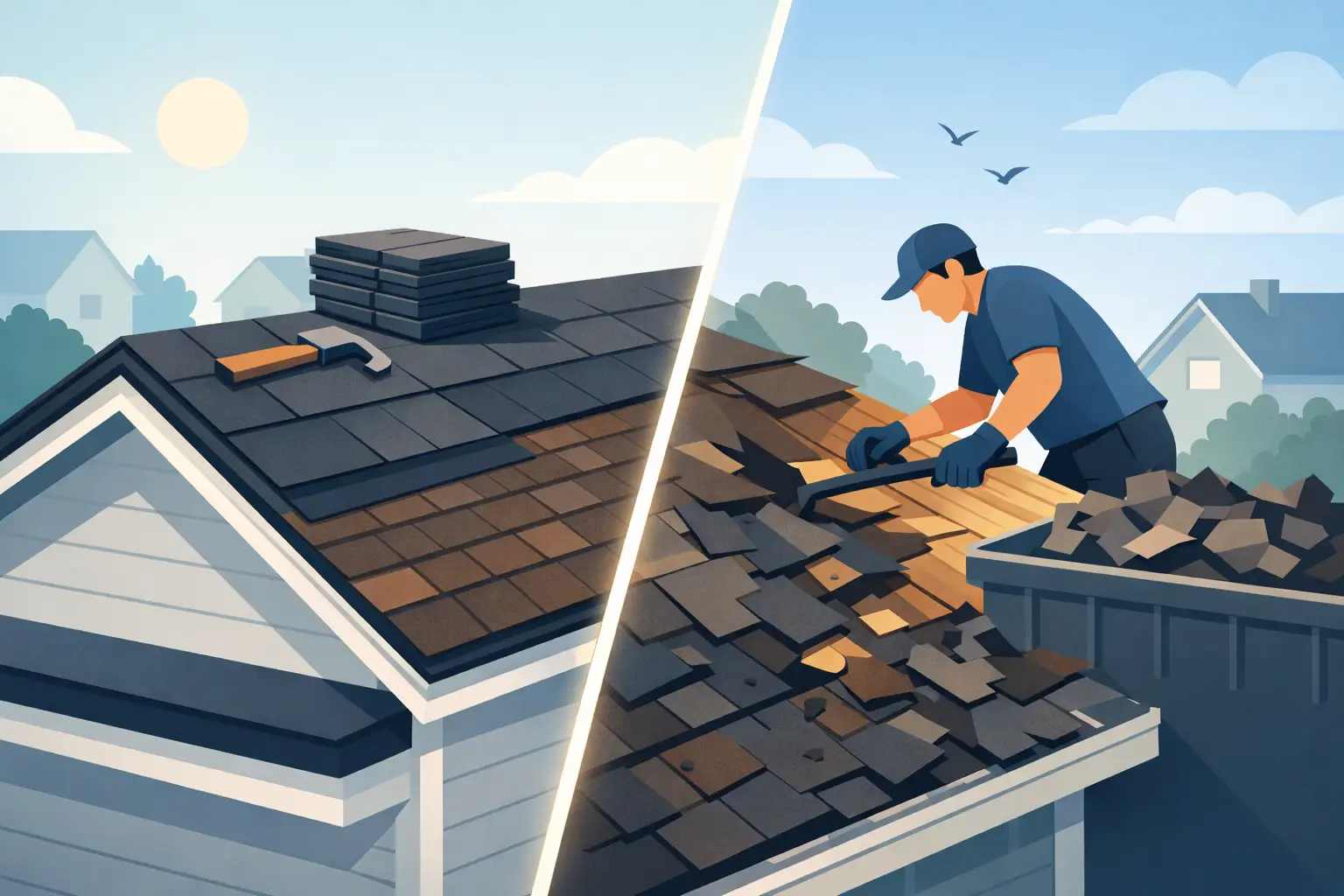
A roof overlay, also called a recover, means installing a new roofing layer over an existing one. On a shingle roof, new shingles are placed over the old shingles rather than stripping them down to the deck. On an eligible low-slope commercial roof, a new membrane system may sometimes be installed over an existing roof assembly.
The main appeal is straightforward: less removal work often means less labor, less disposal, and a lower initial project cost. It may also shorten the time the roof is exposed during installation. When the existing roof is dry, securely attached, relatively flat, and limited to one existing layer where local requirements allow it, an overlay can be a reasonable option.
But an overlay does not correct problems concealed below the old roof. It covers the existing assembly. That is why it should never be chosen by default or based only on a price comparison.
What Does a Tearoff Include?
A complete tearoff removes the existing roofing material down to the roof deck. This gives the roofing contractor a clear view of the sheathing and allows damaged, soft, or deteriorated sections to be replaced before new underlayment and roofing materials are installed.
For a home, a tearoff also makes it possible to install a complete shingle system with the proper underlayment, ice and water protection where needed, flashing details, and ventilation considerations. For low-slope commercial roofs, removal may reveal wet insulation, deck concerns, drainage issues, or flashing failures that a recover would leave in place.
A tearoff generally costs more upfront because it includes labor for removal, disposal, and any deck repairs found during the work. It also takes longer. Still, the higher initial investment often brings greater confidence because the contractor is not building the next roof over unknown conditions.
Roof Overlay Versus Tearoff: The Real Trade-Offs
The first difference most owners notice is price. An overlay can cost less because there is less demolition and less material sent for disposal. That savings is real, and it can be meaningful for a property with an otherwise sound roof assembly.
The second difference is long-term performance. A tearoff offers the opportunity to correct hidden defects before they affect a new roof. If the deck has moisture damage, the existing roof has poor drainage, or flashing has repeatedly leaked, covering the roof may postpone rather than solve the problem.
Weight is another consideration. Roofing materials are heavy. A structure must be able to carry the added load, and code restrictions may limit the number of layers permitted. A second layer of shingles can also make future leak detection and repairs more difficult. The original roof profile, bumps, and irregularities may telegraph through the new layer, affecting appearance and sometimes shingle performance.
For commercial roofs, the decision often turns on moisture and drainage. A recover can be a practical way to extend service life when the existing roof is dry and stable. If water is trapped in the insulation or roof assembly, however, installing a new membrane over it can lock in the conditions that cause deterioration. Areas of standing water, seam failures, saturated insulation, and deck deflection deserve close evaluation before a recover is approved.
When an Overlay May Make Sense
An overlay can be worth considering when the existing roof has only one layer, the roof deck is believed to be sound, and there is no evidence of chronic leaks or moisture intrusion. It can also fit a property owner who needs a cost-conscious solution and understands that the condition of the existing roof limits what can be verified without removal.
On commercial buildings, a recover may be appropriate when inspection confirms the current membrane is secure, insulation is dry, drainage is acceptable, and the roof can accept the added assembly. The details around penetrations, curbs, drains, walls, and edges still need to be addressed carefully. A recover is not simply rolling out new material over an old roof.
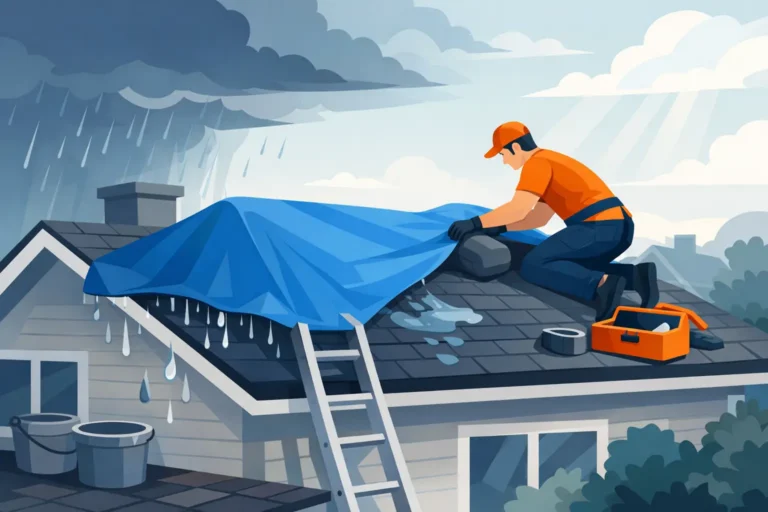
An overlay should be approached cautiously after storm damage. Hail, lifted shingles, or visible damage may be only part of the story. If wind or water has compromised the layers below, a full removal can provide a clearer path for repairs and insurance documentation.
When a Tearoff Is the Better Choice
A tearoff is usually the stronger option when a roof has active or recurring leaks, visible sagging, soft spots, multiple existing layers, or signs that moisture has reached the deck or insulation. These conditions need to be investigated, not buried.
It is also the preferred route when the owner wants the longest-term replacement approach and a clean starting point for a manufacturer-backed roofing system. Removing the old roof lets the installation team inspect the deck, improve protection at vulnerable areas, and rebuild the roofing system according to the building’s needs.
For residential roofs in Michigan, ice dam history and attic ventilation concerns can influence this choice. A replacement roof cannot fully compensate for moisture problems or heat loss from inside the home, but a tearoff provides the best opportunity to identify roof-deck damage and install the right protective layers at the eaves and penetrations.
For flat and low-slope buildings, a tearoff is often necessary when insulation is wet or deteriorated, drainage needs correction, or the existing membrane has failed in multiple areas. Starting over may be disruptive, but it can prevent the expense of placing a new roof over a failing foundation.
Why an Inspection Matters More Than a Quick Quote
No responsible contractor should recommend an overlay or tearoff without looking at the roof, asking about leak history, and reviewing prior repairs. On a commercial roof, that evaluation may include test cuts or moisture investigation to determine whether water is present below the membrane. On a home, it includes checking roof layers, flashing, shingle condition, attic-related concerns, and visible deck distress.
A detailed estimate should explain whether removal is included, how many layers are being removed, what happens if deck repairs are required, how landscaping and property will be protected, and how debris will be cleaned up and disposed of. These details prevent surprises once work begins.
At DLR Construction, the goal of a free estimate is not to steer every customer toward the same solution. It is to identify the roof condition, explain the available paths plainly, and provide a defined scope of work so the owner can make a confident decision.
Questions to Ask Before Choosing
Before approving either option, ask how many roofing layers are currently on the building, whether local code permits another layer, and whether there is evidence of trapped moisture. Ask how leaks, flashing, ventilation, drainage, and damaged decking will be handled. For a commercial property, also ask whether the insulation has been evaluated and how roof drains and edge details will be addressed.
The answers should be specific to your building. A low initial number is not a useful comparison if one proposal leaves deteriorated materials in place while another includes removal, inspection, disposal, and repairs needed for a sound installation.
A roof overlay can be a sensible, cost-conscious choice under the right conditions. A tearoff can be the wiser investment when the roof has unknowns, water damage, or a history of failure. The best next step is a thorough local inspection that gives you facts about your roof before you decide what belongs on top of it.