
A flat roof rarely fails all at once. More often, it gives building owners a series of warnings: a ceiling stain after heavy rain, recurring ponding water, seams that keep opening, or repairs that hold for a season and then leak again. Knowing when to replace flat roofs can prevent interior damage, tenant disruptions, and the higher cost of reacting to an emergency.
For commercial buildings and low-slope properties in Michigan, the right decision is not based on age alone. A roof may be a good candidate for repair or restoration even after years of service. On the other hand, a newer roof with widespread installation issues or storm damage may need replacement sooner than expected. The condition of the membrane, insulation, drainage, and roof deck all matter.
When to Replace Flat Roofs Instead of Repairing Them
A repair makes sense when the problem is isolated and the rest of the roof system is sound. For example, a single damaged penetration, small puncture, or limited seam separation can often be repaired without replacing the entire roof.
Replacement becomes the more dependable choice when leaks are widespread, the membrane has reached the end of its service life, or water has entered the insulation beneath the roof surface. Repeated patching can seem less expensive in the moment, but it can turn into a cycle of service calls, interior repairs, and lost time for staff or tenants.
Here are seven signs that it is time to seriously consider full replacement.
1. Leaks Keep Returning in New Areas
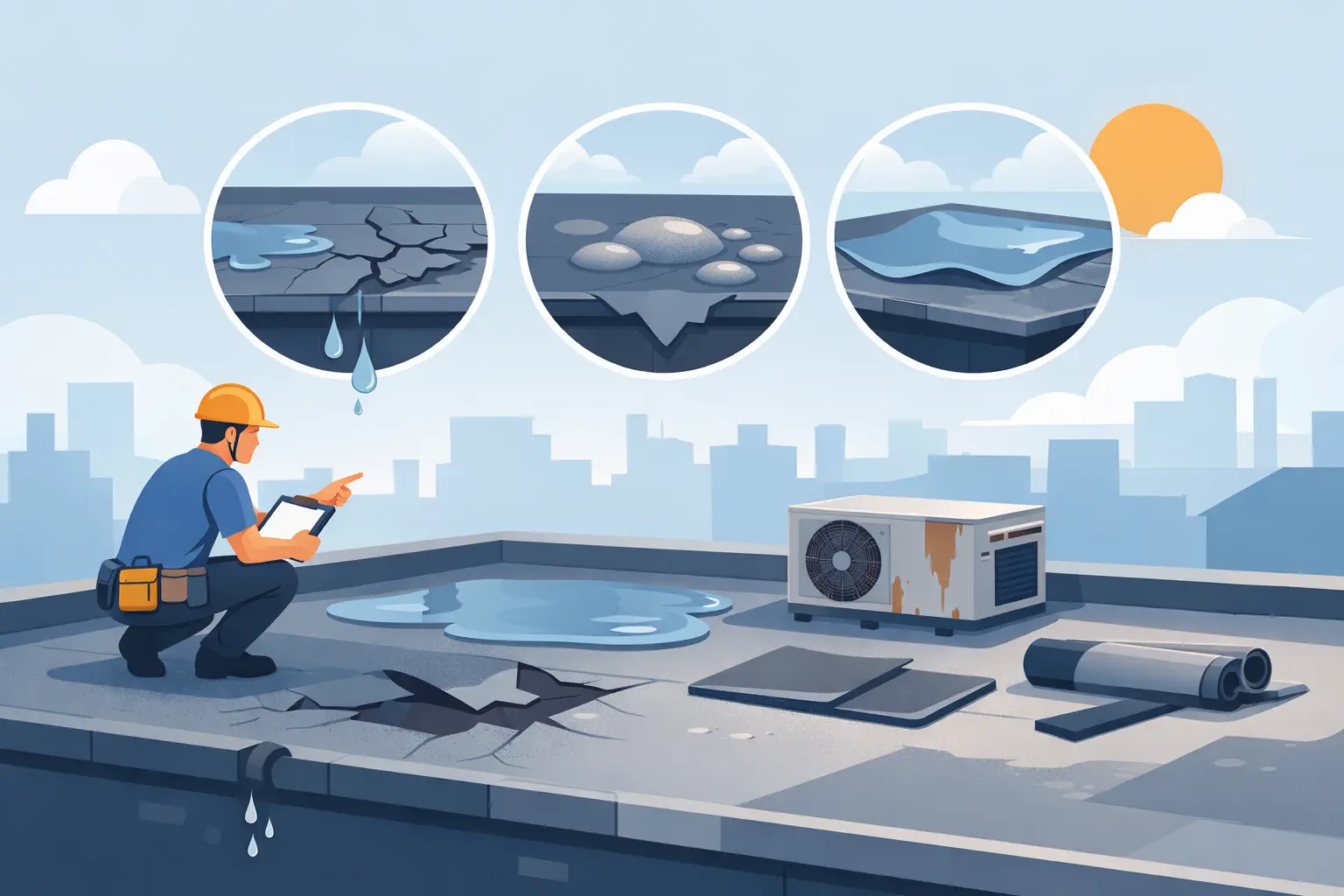
One leak does not automatically mean a roof needs to be replaced. Several leaks in different locations are a different story. When repairs are no longer isolated, the membrane may be deteriorating across the roof rather than at one specific weak point.
Water does not always show up directly below its entry point. It can travel along insulation, decking, or structural members before appearing inside. That is why accurate leak detection matters before deciding whether to patch, restore, or replace.
2. The Membrane Is Cracked, Brittle, or Shrinking
TPO and EPDM membranes are designed to handle weather, movement, and UV exposure, but no roofing material lasts forever. A membrane that has become brittle, cracked, thin, or pulled back from walls and edges may no longer provide reliable protection.
Pay close attention to seams, perimeter flashing, drains, curbs, and pipe penetrations. These are common trouble spots because they experience movement and standing water. If failures are showing up across multiple details, replacement may offer better long-term value than individual repairs.
3. You See Persistent Ponding Water
Water that remains on a roof for more than 48 hours after normal weather has cleared is called ponding water. Small areas of temporary standing water are common on some low-slope roofs, but persistent ponding can speed up membrane deterioration, stress seams, and expose drainage problems.
The answer is not always a complete replacement. Sometimes a drainage correction, tapered insulation, or targeted repair can improve the issue. But if the roof is already aging and ponding has contributed to recurring leaks, replacement allows the drainage and roofing system to be addressed together.
4. Insulation Is Wet or the Roof Deck Is Deteriorating
A roof membrane is only one part of the system. Once water gets below it, insulation can lose its effectiveness and hold moisture against the deck. Over time, that can lead to rot, corrosion, mold concerns, and structural damage.
A professional inspection can help identify whether moisture is limited to a small area or spread beneath the roof surface. If wet insulation or deck damage is extensive, a complete tear-off is often the responsible option. Installing a new membrane over compromised materials can hide the problem instead of solving it.
5. Repairs Are Becoming a Regular Budget Item
There is a practical financial point where repair stops being the economical choice. If your maintenance records show multiple leak repairs every year, rising interior damage costs, or frequent emergency calls after storms, the roof may be costing more than it appears.
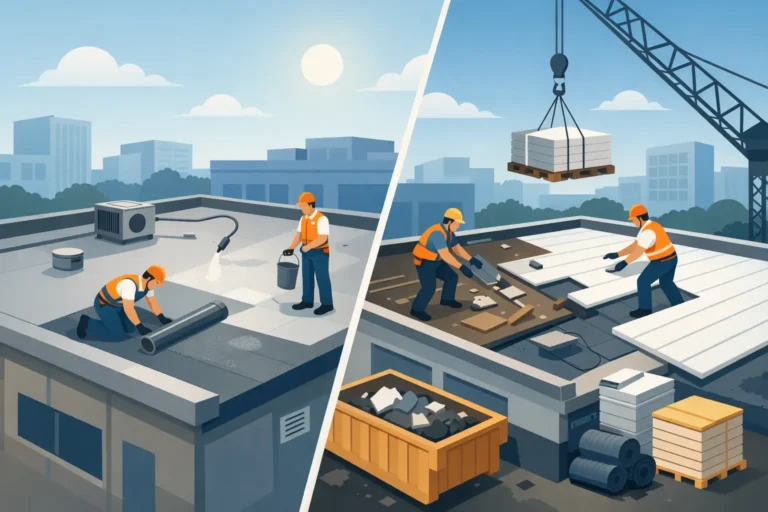
A replacement estimate should clearly separate the scope of work, including tear-off, deck repairs if needed, insulation, membrane installation, flashing details, cleanup, disposal, and warranty information. That level of detail helps property owners compare the real cost of continued repairs with the cost of a new roof system.
6. The Roof Is Near the End of Its Expected Service Life
Flat-roof lifespan varies based on the material, installation quality, drainage, maintenance history, and Michigan weather exposure. A well-maintained membrane may last many years, while a roof exposed to poor drainage, storm damage, or neglected repairs can wear out much earlier.
Age should prompt an inspection, not an automatic replacement decision. If the membrane is still stable, seams are secure, and the roof remains dry, restoration may extend service life. If age-related wear is combined with leaks, cracking, and failing flashings, planning replacement before a major failure is usually the safer path.
7. Storm Damage Has Compromised the System
Wind, hail, falling debris, and ice can damage a low-slope roof in ways that are not always obvious from the ground. Punctures, lifted membrane edges, damaged flashing, and blocked drains can allow water into the system long after the storm passes.
Document visible damage quickly and arrange an inspection. If an insurance claim is involved, clear documentation of the roof condition and proposed scope can help you understand what repairs or replacement work may be covered. Do not wait for a ceiling leak to confirm that the roof was damaged.
Can a Flat Roof Be Restored Instead?
Not every aging flat roof needs to be torn off. A roof coating or recoating system can be an affordable, lower-disruption alternative when the existing roof is structurally sound and dry. Restoration can seal minor surface aging, reinforce vulnerable areas, and help extend the life of a serviceable membrane.
The key word is serviceable. Coating is not a shortcut for a roof with saturated insulation, failing seams throughout, major deck damage, or active leaks in multiple areas. Applying a coating over unresolved moisture issues can delay the visible problem while allowing damage to continue below the surface.
For some building owners, the best path is targeted repair now and restoration later. For others, a complete tear-off and new TPO or EPDM system provides the most predictable long-term result. The right option depends on the roof’s present condition, not just the lowest initial price.
What to Expect During a Flat Roof Evaluation
A useful inspection should go beyond a quick look at the surface. The contractor should assess the membrane condition, seams, flashing, penetrations, drainage, visible ponding, roof edges, and signs of moisture below the membrane. Interior leak locations and repair history can also provide valuable clues.
Ask for a written estimate that explains whether the recommendation is repair, restoration, or replacement and why. You should be able to see what work is included, how the property will be protected during the project, how debris will be handled, and what warranty coverage applies. No surprises is the standard property owners deserve.
DLR Construction provides free estimates for flat-roof repair, restoration, and replacement work for local building owners who need a clear answer before the next leak becomes a larger problem.
Plan Before the Roof Forces the Decision
The best time to evaluate a flat roof is before water reaches the ceiling, inventory, equipment, or tenant space below. If you have noticed recurring leaks, ponding water, membrane wear, or mounting repair costs, schedule an inspection while you still have options. A clear assessment can show whether a focused repair, a restoration coating, or full replacement is the most dependable way to protect your building.