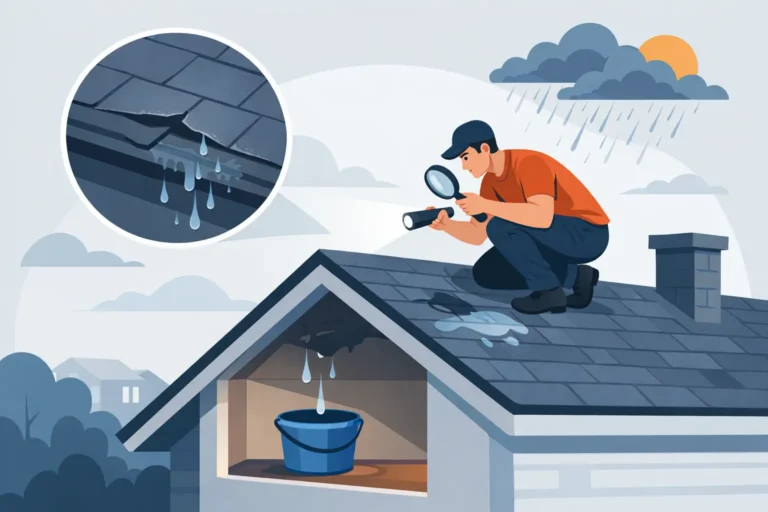


A ceiling stain usually appears long after water has entered the roof system. By that point, insulation may be wet, seams may be separating, and the leak can be traveling well beyond the visible damage. Regular commercial roof inspections help building owners catch those conditions early, before a manageable repair turns into an interior disruption, damaged inventory, or an unplanned roof replacement.
For low-slope commercial roofs, a quick look from the ground is not enough. TPO and EPDM systems rely on properly sealed seams, sound flashing, working drains, and a dry roof assembly beneath the membrane. A careful inspection gives property managers a clearer picture of what is happening overhead and what action makes sense next.
What Commercial Roof Inspections Can Reveal
A commercial roof can look serviceable from a parking lot while small defects are already allowing water into the system. Wind, temperature changes, standing water, foot traffic, and aging materials all place stress on a low-slope roof. The goal of an inspection is not to create alarm. It is to identify the actual condition of the roof and separate urgent needs from items that can be planned and budgeted.
On TPO roofs, inspectors look closely at heat-welded seams, penetrations, corners, and membrane edges. Open seams, punctures, loose flashing, and failed sealant around pipes or HVAC curbs can create direct paths for water. EPDM roofs need the same attention at seams and flashings, along with checks for shrinkage, cracking, lifting edges, and deterioration around rooftop equipment.
Drainage is another major concern. Ponding water does not always mean the roof is leaking immediately, but water that remains after a reasonable drying period can speed up membrane wear and expose weak areas. Clogged drains, blocked scuppers, damaged gutters, and poor slope all deserve attention because they affect the roof’s long-term performance.
An inspection can also reveal conditions below the surface. Soft spots, recurring leaks, membrane bubbling, or moisture around seams may point to wet insulation or trapped water within the roof assembly. That does not automatically mean the entire roof must be removed. It does mean the contractor should investigate further before recommending a repair, restoration, or replacement.
How a Commercial Roof Inspection Works
A useful inspection is systematic. It should provide more than a general statement that the roof looks good or bad. Property owners need clear findings, photographs when helpful, and a practical explanation of what the findings mean.
The roof surface and membrane
The inspection begins with the membrane itself. The contractor checks for splits, punctures, exposed reinforcement, deteriorated areas, open laps, and signs that previous repairs are failing. Special care is given to locations where the membrane changes direction or meets another surface, since those transitions are common leak points.
Rooftop traffic matters here. Service technicians working on HVAC units can accidentally damage a membrane, especially when tools, panels, or sharp equipment are set directly on the roof. Walk pads and protected service paths can reduce future damage when routine equipment access is necessary.
Flashings, penetrations, and edges
Most commercial roof leaks occur at details rather than in the middle of an open field of membrane. Inspectors check pipe boots, vents, drains, curbs, skylights, wall flashings, expansion joints, and perimeter edges. These components move differently as temperatures change, and sealants do not last forever.
The edge of the roof also deserves close attention. Loose metal edging, separated terminations, or failing fasteners can allow wind-driven rain under the membrane. If wind has lifted a section, the issue should be addressed promptly, even if an active leak has not yet appeared inside.
Drainage and interior clues
A roof inspection should include drains, scuppers, gutters, and areas where water collects. Debris is often a simple fix, but recurring ponding may require a more detailed evaluation of the roof slope or drainage layout.
When access is available, interior observations add valuable context. Water stains, moldy odors, damp ceiling tiles, peeling paint, and drips near exterior walls can help narrow down where water is entering. Still, the source is not always directly above the stain. Water can travel along decking, insulation, framing, or utility lines before showing itself indoors.
When to Schedule Commercial Roof Inspections
For many buildings, a professional inspection twice a year is a sensible starting point: once after winter and once in the fall before colder, wetter weather arrives. Michigan winters can be especially hard on low-slope roofs because freeze-thaw cycles, ice, and debris can worsen small openings around seams and flashings.
A roof should also be inspected after a major windstorm, hail event, or heavy rainfall that exposes a possible leak. Do not wait for water to reach the occupied space if you notice loose membrane, drainage backups, damaged edge details, or new ponding areas.
The right schedule depends on the roof’s age, membrane type, building use, rooftop equipment, and leak history. A newer roof with limited foot traffic may need less frequent attention than an older roof with multiple HVAC units and a history of repairs. Consistency matters more than choosing an arbitrary calendar date.
Repair, Restore, or Replace: Let the Findings Lead
An inspection is most valuable when it supports a realistic decision. A small puncture, open seam, or localized flashing failure may only require a targeted repair. Prompt repairs are often the most cost-effective choice when the membrane is otherwise in good condition and the underlying insulation remains dry.
If the roof has widespread surface wear but is still structurally sound, a restoration coating may be worth considering. An Insta-Coat flat-roof sealing and recoating system can extend service life, reduce disposal from a tear-off, and cost less than full replacement in the right situation. Restoration is not a cover-up for a failing roof, though. Wet materials, extensive membrane failure, or major drainage problems need to be corrected first.
Complete replacement becomes the better option when leaks are recurring across multiple areas, the insulation is saturated, seams and flashings are broadly deteriorated, or the roof has reached the end of its practical service life. A full tear-off allows damaged materials to be removed and gives the new TPO or EPDM system a sound base.
There is no one answer for every building. The best recommendation considers the roof’s condition, how long you plan to own the property, tenant or business needs, and the cost of repeated repairs versus a planned project. A transparent estimate should make that decision easier by clearly defining the proposed scope, protection measures, cleanup, disposal, and warranty information.
Keep Records Between Inspections
A simple roof file can save time when an issue develops. Keep inspection reports, repair invoices, photos, warranty documents, and notes about interior leaks in one place. Record the date, weather conditions, and exact location whenever water appears inside. That information can help identify recurring patterns and supports a faster response when a contractor arrives.
Building staff can also help by reporting blocked drains, loose materials, or water near rooftop equipment as soon as they see it. They should avoid applying store-bought patches or walking on questionable areas without guidance. A temporary patch can sometimes hide the original failure and make a proper diagnosis harder.
For property owners in Durand and nearby communities, DLR Construction provides detailed commercial roof evaluations for TPO, EPDM, repair, replacement, and restoration decisions. The purpose is straightforward: explain what the roof needs now, what can be monitored, and what options fit the building and budget without surprises.
A roof inspection is not just maintenance paperwork. It is a chance to make a controlled decision before water forces an emergency one. If your building has an active leak, standing water, storm damage, or an aging low-slope roof, a clear professional evaluation can give you a practical next step and a free estimate you can use to plan with confidence.