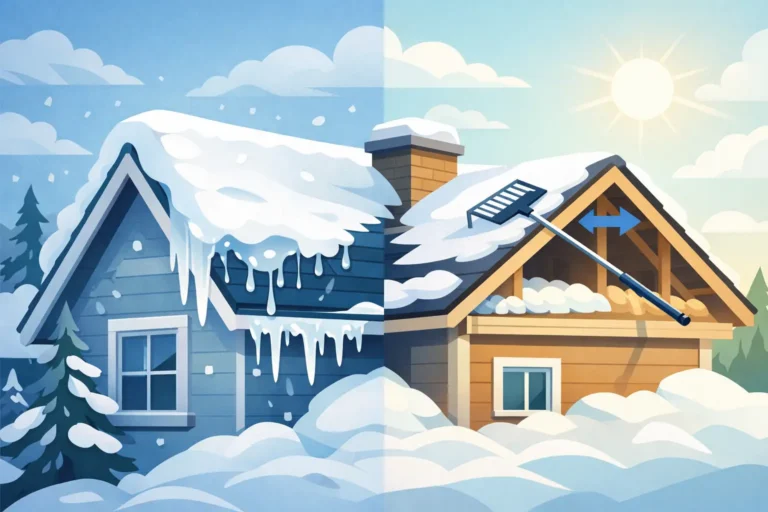


A ceiling stain after a hard Michigan rain creates two urgent questions: where is the water getting in, and who pays roof leak repairs? The answer depends on who owns the building, what caused the leak, and what the insurance policy or lease says. The one part that should not wait is locating the source and limiting further damage. A small opening around flashing, a damaged shingle, or a seam failure on a low-slope roof can allow water to travel far from the visible stain.
Who Pays Roof Leak Repairs on a Home?
For a single-family home, the homeowner is usually responsible for roof maintenance and repairs. That includes leaks caused by age, worn shingles, failed pipe boots, damaged flashing, clogged drainage, or installation issues that are no longer covered by a workmanship warranty.
Homeowners insurance may pay when a covered, sudden event damages the roof. Wind can lift or tear shingles. Hail can bruise or crack roofing materials. A falling tree limb can puncture the roof deck. In those situations, the policy may help cover repair or replacement costs after the deductible, subject to the policy’s terms, exclusions, depreciation rules, and claim approval.
Normal wear is different. A roof that has reached the end of its service life usually is not an insurance claim simply because it begins leaking. Insurers commonly view gradual deterioration, deferred maintenance, and long-term leakage as owner responsibilities. That can feel frustrating, but it is also why routine inspections and prompt repairs matter. Addressing a loose flashing detail early is far less expensive than repairing wet insulation, stained drywall, damaged framing, or mold conditions later.
If a recent storm may have caused the problem, document the date, visible damage, and interior water staining before permanent repairs begin. Temporary protection may be necessary to prevent additional loss, but keep receipts and take photos. A qualified roofing inspection can identify whether the damage appears storm-related, maintenance-related, or connected to a previous installation issue.
When Insurance May Pay for a Leaking Roof
Insurance coverage is not determined by the leak alone. It is determined by the cause of the leak and the language in the policy. A roof can be leaking during a storm without the storm being the actual cause. For example, rain may reveal an old deteriorated penetration seal that has been allowing moisture into the roof system for some time.
A claim is more likely to be worth discussing with your insurer when there is clear evidence of a covered event, such as wind damage, hail impact, a tree strike, or another sudden accidental loss. Even then, payment is not automatic. Some policies settle roof claims based on actual cash value rather than full replacement cost, especially for older roofs. The deductible may also be close to or greater than the cost of a limited repair.
Be careful about making repair decisions based only on what you can see from the ground. Missing shingles may be obvious, but storm damage can also affect flashing, ridge areas, valleys, vents, and roof components that are not safely visible from a ladder. A detailed inspection and line-item estimate give you useful information whether you file a claim or pay for the repair directly.
Who Pays Roof Leak Repairs in a Rental?
In most residential rentals, the landlord is responsible for maintaining the roof and keeping the property habitable. A leak caused by an aging roof, storm damage, failed flashing, or a construction defect is generally the landlord’s repair responsibility. Tenants should report the problem quickly and in writing, then take reasonable steps to protect personal belongings from water.
A tenant may be responsible if their actions directly caused the damage. That is less common with roof leaks, but it can happen if someone damages the roof while installing an antenna, satellite equipment, decorations, or another item without permission. The lease, the circumstances, and applicable law all matter.
Tenants should not assume the landlord’s property insurance will replace damaged personal belongings. The building owner’s policy typically covers the structure, while renters insurance may cover a tenant’s furniture, clothing, electronics, and other personal property, depending on the policy and cause of loss. Photograph affected items and save communication records, especially if water has reached ceilings, walls, or flooring.
For landlords, a prompt roofing response protects more than the building. It can prevent a minor leak from becoming a tenant-relations problem, a larger interior restoration project, or a disruption to occupancy. Clear documentation of the reported issue, inspection findings, temporary protection, and completed repair is good business practice.
Condos and HOAs: Check the Governing Documents
Condominium roof leaks can be more complicated because the roof may be a common element maintained by the homeowners association. If so, the HOA may be responsible for roof repairs and may use association insurance for qualifying storm losses. But the unit owner can still be responsible for interior finishes, improvements, deductibles assessed by the association, or damage that originated from an owner-controlled feature.
Do not rely on assumptions about what the HOA covers. Review the master deed, bylaws, association rules, and insurance information. Report active leaks immediately to the property manager or board, even if the water is only visible inside your unit. Waiting can make the damage worse and create disagreements over when the loss began.
Commercial Roof Leaks: Ownership and Lease Terms Decide
For commercial properties, the first question is whether the building is owner-occupied, leased, or managed under a triple-net lease. A building owner is often responsible for the roof structure and major capital repairs, but a commercial tenant’s lease may shift some maintenance, repair, insurance, or deductible obligations to the tenant.
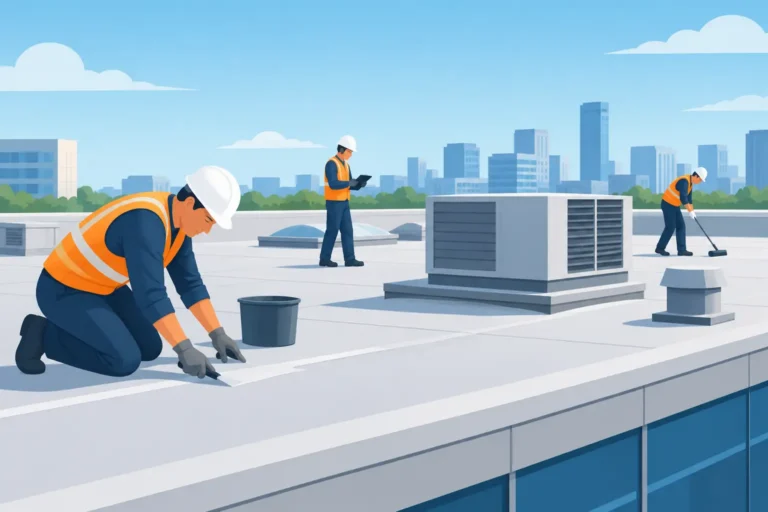
The roof system also affects the repair approach. On a low-slope commercial roof, water may enter at a membrane seam, penetration, drain detail, edge metal, or flashing transition. A leak that appears in one office may have started many feet away. Proper leak detection is more valuable than applying sealant to the visible interior stain and hoping the problem is solved.
For a roof with localized issues and a sound underlying system, a repair or restoration approach may make financial sense. Where the membrane is broadly worn, wet insulation is widespread, or repairs are becoming repetitive, replacement may be the better long-term decision. The right answer should come from documented roof conditions, not a one-size-fits-all recommendation.
What to Do Before the Repair Is Scheduled
First, protect people and property. Move furniture, electronics, inventory, and valuables away from the affected area. Use containers to catch drips if it is safe to do so, and avoid using electrical fixtures or outlets near standing water or a wet ceiling.
Next, document what you see. Take photos and videos of ceiling stains, active dripping, exterior debris, damaged shingles if visible from the ground, and any belongings affected by water. Note when the leak appeared and whether it followed wind, hail, ice buildup, or heavy rain.
Then arrange for a professional roof inspection. The goal is to identify the actual entry point, explain the condition of the surrounding roof area, and provide a clear scope of work. A dependable estimate should separate repair work from optional recommendations and explain protection measures, cleanup, disposal, and applicable warranty information. That clarity helps homeowners, landlords, property managers, and insurers make decisions without surprises.
A Repair Bill Is Easier to Handle With Clear Evidence
The question of who pays is rarely answered by the water stain alone. Ownership, the cause of the damage, insurance coverage, warranties, and lease terms all have a role. What is certain is that delaying an active leak usually increases the final cost.
If you have a leak in Durand, Byron, Gaines, Swartz Creek, Howell, Fowlerville, or Williamston, DLR Construction can inspect the roof, explain what is causing the problem, and provide a free, detailed estimate for the work needed. A clear diagnosis is the best first step toward protecting your property and knowing where responsibility belongs.