
A roof problem at an apartment building rarely stays a roof problem. A small leak can damage ceiling finishes, interrupt a tenant’s day, create difficult maintenance calls, and expose weaknesses that have been building below the surface for years. An apartment roof tearoff is a major project, but when the existing system has reached the end of its service life, it can be the most dependable way to protect the building and avoid repeated repair costs.
For owners and property managers, the goal is not simply to remove old roofing and install new material. It is to make a sound decision based on the roof’s condition, manage the work responsibly around tenants, and receive a clear scope with no surprises.
When an Apartment Roof Tearoff Is the Right Call
A complete tearoff means removing the existing roof membrane and associated materials down to the roof deck or other approved substrate. This gives the roofing contractor a direct view of what is underneath the roof surface, including wet insulation, deteriorated decking, trapped moisture, and damage around drains, walls, vents, and penetrations.
Tearoff is often recommended when the roof has more than one existing layer, widespread leaks, saturated insulation, failing seams, or recurring problems that repair work has not solved. It may also be necessary when a new roofing system cannot be properly installed over the existing surface without compromising drainage, attachment, or manufacturer warranty requirements.
Not every aging roof needs to be removed. A low-slope apartment roof with a dry, stable substrate and limited surface wear may be a candidate for restoration or recoating. Insta-Coat restoration, for example, can be a practical lower-cost option when the roof is structurally sound and moisture testing supports that approach. The right answer depends on the existing system, the extent of damage, drainage performance, and the owner’s long-term plans for the property.
A good inspection should lead the decision. If a contractor recommends a tearoff, ask what they found and why repairs or restoration would not provide a reliable result. Clear answers matter more than a quick recommendation.
What Happens Before Roofing Starts
The best apartment projects are organized before the first section of roofing comes off. A contractor should inspect the roof, identify access points, review drainage areas, document visible concerns, and build a work plan around the occupied building below.
The estimate should spell out the system being removed, the new system being installed, disposal, jobsite protection, cleanup, and warranty information. It should also address how unforeseen deck or substrate repairs will be handled. Roofing crews cannot always see hidden damage until the old materials are removed, but the process for identifying, documenting, and pricing that work should be discussed in advance.
For a larger multifamily property, planning also includes tenant communication. Residents should know when work will begin, where crews and equipment will be located, which parking or entry areas may be affected, and whom to contact with immediate concerns. Roofing is noisy work. Scrapers, removal equipment, delivery trucks, and fastening tools are part of the process. A straightforward notice helps tenants prepare and reduces avoidable frustration.
Property managers should also consider the building’s daily operations. Childcare schedules, medical appointments, move-ins, dumpsters, delivery routes, and maintenance access can all affect staging. A local roofing contractor that communicates directly with the owner or manager can adjust the plan when conditions on site require it.
What the Tearoff Process Looks Like
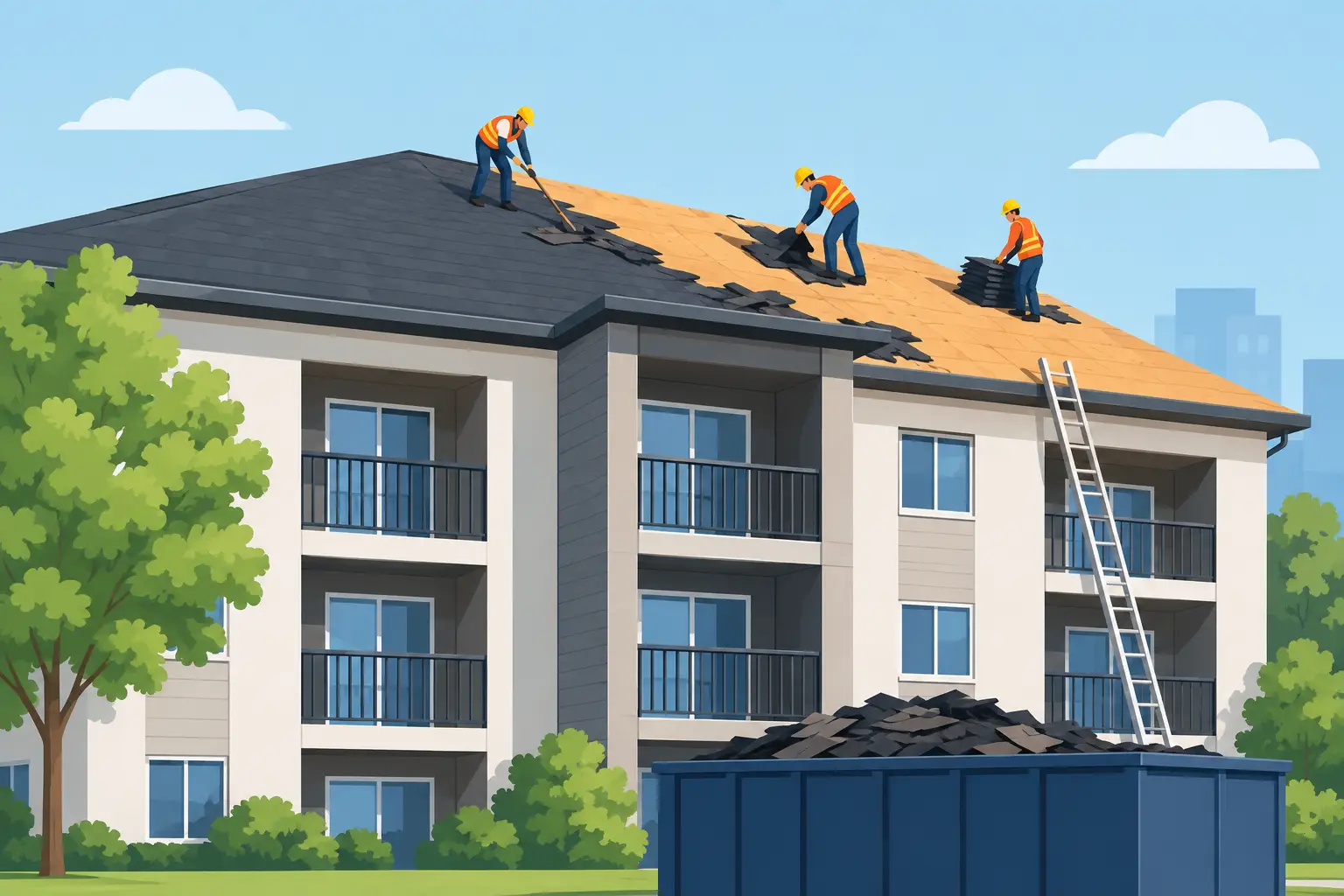
Every building is different, but most apartment roof tearoff projects follow a similar sequence. Crews begin by protecting designated ground areas and setting up debris handling. The existing membrane is cut into manageable sections and removed along with insulation or cover boards that cannot remain in place.
Once the deck is exposed, the crew evaluates its condition. This is one of the most valuable parts of a tearoff. Soft areas, rot, damaged wood, deteriorated fasteners, and moisture-related problems can be addressed before the new roof is installed. Covering those issues with another roof layer may save money at the start, but it can leave the building owner with a larger problem later.
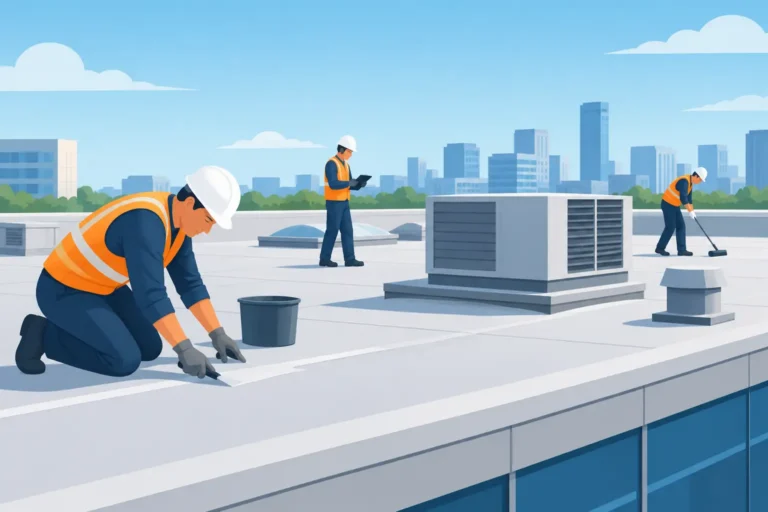
After repairs are completed, the new roofing assembly is installed according to the selected system and the roof’s needs. For many low-slope apartment buildings, that may involve a TPO or EPDM membrane system, along with compatible insulation, flashing, edge details, drain work, and penetration seals. The roof membrane is only one part of the system. Transitions at parapet walls, rooftop equipment, curbs, drains, and perimeter edges often determine how well the roof performs over time.
The crew then completes site cleanup and a final walkthrough. A responsible contractor should remove roofing debris, inspect the work area for nails and loose materials, and explain the completed scope. On occupied properties, cleanup is not a finishing touch. It is part of protecting tenants, visitors, vehicles, and the owner’s property.
The Trade-Offs: Cost, Risk, and Long-Term Value
A tearoff generally costs more upfront than a recover or coating project because it includes labor for removal, disposal, and possible deck repairs. It can also take longer and create more jobsite activity. Those are real considerations, especially for owners managing operating budgets or planning capital improvements across multiple buildings.
But the lower initial price is not always the lower long-term cost. Installing over wet materials can trap moisture. Leaving failed insulation in place can reduce energy performance. Avoiding deck repairs can allow structural damage to worsen where no one can see it. A full tearoff gives the building a clean starting point and allows the new roof system to be built on a known, inspected substrate.
The decision often comes down to risk tolerance. If the roof is near the end of its life and has recurring leaks, a temporary repair strategy may only postpone a larger expense while adding tenant disruption and interior repair costs. If the roof is generally sound and the issues are isolated, targeted repair or restoration may be the more responsible investment. There is no one-size-fits-all answer, and an estimate should reflect that.
Questions to Ask Before You Approve the Work
Before signing a contract, property owners and managers should understand the project beyond the total price. Ask whether the quote includes complete removal and disposal of existing materials, what type of membrane system is proposed, and how flashing, drains, and rooftop penetrations will be handled. Confirm whether the contractor is licensed and insured and ask what workmanship and material warranty information will be provided.
It is also reasonable to ask how the crew will protect landscaping, walkways, parking areas, and tenant access. If hidden deck damage is found, ask how approval will be obtained before extra work moves forward. A detailed, line-item estimate helps answer these questions before the project is underway rather than after costs have changed.
For storm-related roof damage, documentation can be especially useful. Photos, inspection findings, and a clear scope can help owners understand the work and provide useful information when communicating with an insurance carrier. Insurance coverage depends on the policy and cause of damage, so no contractor should promise an outcome. They can, however, document the roof condition accurately and explain the repair or replacement scope clearly.
A Roof Project Should Feel Managed, Not Mysterious
Apartment roofing requires more coordination than a typical single-family replacement because people live below the work area and the building must continue operating through the project. That makes experience, communication, and careful site protection just as important as the membrane selected.
DLR Construction approaches commercial roof work with detailed inspections, clearly defined estimates, and direct accountability from a local, family-owned team. For apartment owners in Durand and nearby communities, a free estimate is a practical first step toward understanding whether a tearoff, repair, or restoration option makes the most sense.
The right roofing decision starts with a clear look at what is on the roof now, what is happening underneath it, and what will protect the property for years rather than just the next rainfall.