
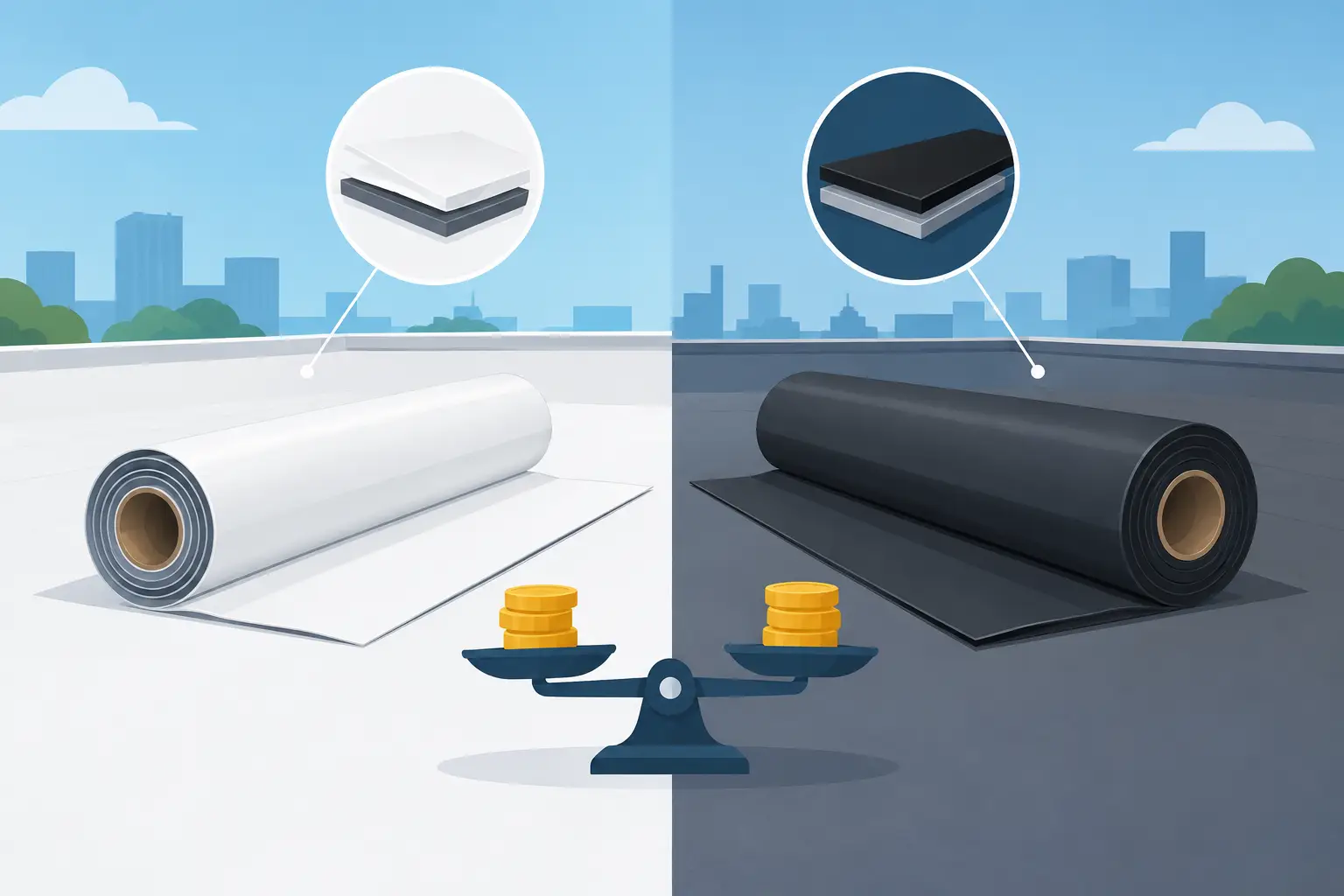
A low-slope roof quote can look straightforward until two membrane options appear side by side. The real question behind TPO versus EPDM cost is not simply which material costs less per square foot. Building owners need to know what is included in the price, how the roof will handle Michigan weather, and whether the system fits the condition of the existing roof.
TPO and EPDM are both proven single-ply commercial roofing systems. Either can be a sensible choice for an office, shop, warehouse, apartment building, or other low-slope structure. The better value depends on the roof’s size, drainage, insulation, details around penetrations, and whether the project is a repair, restoration, recover, or complete tear-off.
Typical TPO Versus EPDM Cost Ranges
For a professionally installed commercial roof, EPDM often has a lower starting cost than TPO. In many Michigan projects, an EPDM replacement may fall roughly in the range of $5 to $10 per square foot installed, while TPO may commonly run about $6 to $12 per square foot installed. Those are broad planning ranges, not a substitute for an inspection and written estimate.
A 10,000-square-foot roof, for example, may not actually receive pricing based on 10,000 square feet of membrane alone. Parapet walls, curbs, drains, skylights, HVAC units, edge metal, roof access, and the amount of wet insulation all affect labor and material needs. A roof with a simple open layout costs differently than a roof with dozens of pipes, seams, and equipment supports.
The important comparison is the complete installed system. A lower membrane price does not help if the scope leaves out damaged insulation, proper flashing, drain work, or other details needed to keep water out. A clear line-item estimate helps property owners see what is being removed, replaced, protected, cleaned up, and warranted before work begins.
Why TPO Often Costs More Up Front
TPO is a white thermoplastic membrane with seams that are heat-welded together. Its bright surface can reflect a significant amount of sunlight, which may help reduce rooftop heat gain during warmer months. That can be especially appealing on larger commercial buildings with substantial interior cooling needs.
The installation process can add to TPO’s cost. Heat welding requires the right equipment, clean working conditions, and experienced installation crews. Welded seams are a major advantage when completed correctly, but workmanship matters. A poorly welded seam or poorly detailed penetration can create a leak path regardless of the membrane selected.
TPO pricing also varies by membrane thickness. A thicker membrane generally costs more, but it can provide additional durability in areas exposed to foot traffic, maintenance activity, or equipment service. On a building with frequent rooftop access, the membrane alone may not be the full answer. Walk pads and properly planned service paths can protect the investment.
Why EPDM Can Be the Lower-Cost Choice
EPDM is a synthetic rubber membrane, most often black, though lighter options are available. It has been used on low-slope roofs for decades and remains a practical, dependable choice for many buildings in this area.
Its lower installed cost often comes from material pricing and a familiar installation process. EPDM seams are typically adhered or taped rather than heat-welded. A properly installed seam system can perform very well, but the roof still depends on careful surface preparation and correct detailing at edges, drains, and penetrations.
EPDM’s dark surface absorbs heat, which can be a benefit in cold weather but may contribute to greater heat gain during sunny periods. For a building where summer cooling costs are a major operating concern, a reflective TPO surface may make the higher initial investment easier to justify. For other buildings, especially where cooling demand is limited, the difference may not carry the same weight.
What Has the Biggest Effect on Your Final Price?
Membrane selection matters, but the condition and design of the existing roof usually have a larger impact on the final number. Water trapped in insulation cannot simply be covered and forgotten. Wet materials lose insulating value and can contribute to ongoing leaks, deck deterioration, and interior damage. If a roof inspection finds widespread moisture, a complete tear-off may be the responsible recommendation.
Roof size also changes the math. Larger, open roofs can have a lower per-square-foot cost because setup, mobilization, and edge details are spread across more area. Small roofs and roofs with complicated layouts often have a higher per-square-foot price, even when the total project cost is lower.
Other common cost drivers include:
- The need to remove one or more existing roof systems
- Damaged or saturated insulation and deck repairs
- Drainage problems, ponding water, and tapered insulation needs
- Flashing around HVAC curbs, pipes, skylights, walls, and roof edges
- Access limitations for materials, equipment, and debris removal
- Required code upgrades, permits, and occupied-building protection
These are not add-ons a contractor invents after the fact. They are parts of a roof system that need to work together. An estimate should explain them clearly so the owner can make a decision without surprises.
Installation Method Changes the Cost of Both Systems
TPO and EPDM can be installed in several ways, including fully adhered, mechanically attached, or ballasted systems where the building design allows. The best method is based on the deck type, wind exposure, roof slope, existing conditions, and project requirements.
A fully adhered roof can offer a clean appearance and strong attachment across the roof surface, but adhesive work can require more labor and suitable weather conditions. A mechanically attached system may be installed efficiently, yet fastening patterns and seam layout must be designed correctly. Ballasted systems have their place, but the added weight and maintenance considerations are not right for every building.
When comparing quotes, ask whether both proposals use the same installation method, membrane thickness, insulation value, and flashing scope. Two estimates can name the same membrane material while describing very different roof assemblies.
Repair, Restoration, or Replacement?
A full replacement is not always the most economical answer. If the membrane is generally sound, the insulation is dry, and leaks are isolated, a targeted repair may buy useful time at a much lower cost. Leak detection should come before broad repair recommendations, particularly on roofs where water can travel beneath the membrane before showing up indoors.
Roof restoration may also be worth considering when the existing roof is a good candidate. A coating system can extend service life and reduce waste when the substrate is dry, stable, and properly prepared. It is not a shortcut for a failing roof with widespread wet insulation, open seams, or structural concerns. The right answer comes from the roof’s actual condition, not from a one-size-fits-all sales pitch.
For property managers planning ahead, it can help to separate immediate leak control from long-term capital planning. A repair may be the right move this season, while a replacement budget is prepared for a later date. That approach is practical as long as the roof is inspected honestly and the risks are understood.
Which Has the Better Long-Term Value?
Neither TPO nor EPDM wins every comparison. TPO may provide stronger value when a reflective surface, heat-welded seams, and energy performance are priorities. EPDM may be the smarter value when a proven rubber membrane and a lower initial installed cost better match the building and budget.
Service life depends heavily on installation quality, drainage, routine inspections, and prompt repairs after storm damage or equipment work. Even a premium membrane can fail early if flashing is neglected or ponding water is allowed to remain. Conversely, a well-installed system that receives regular maintenance can provide reliable service for many years.
The most useful quote is not necessarily the lowest one. It is the one that makes the scope easy to understand, identifies conditions that affect performance, and gives you a realistic view of cost now and likely maintenance later.
For building owners in Durand and nearby communities, a free roof inspection and detailed estimate can turn a broad TPO-versus-EPDM comparison into a clear decision for the specific building. DLR Construction can review the membrane, insulation, drainage, and roof details so you know what the work requires before committing to a project.