

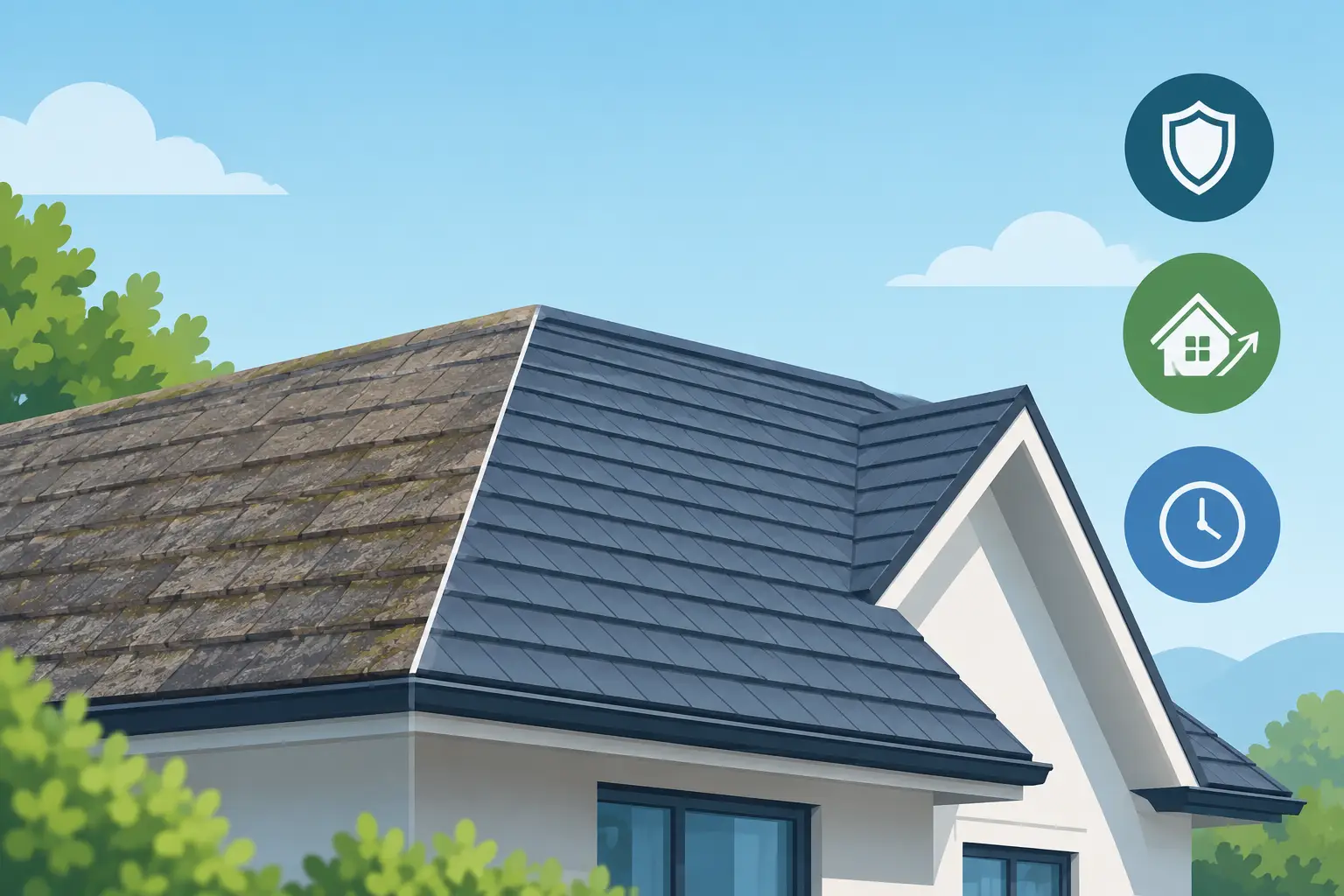
A flat-roof leak does not automatically mean your building needs a full tear-off. If the membrane is still structurally sound, roof restoration may stop recurring water entry, improve the roof’s protective surface, and postpone replacement at a lower project cost. The key is knowing whether the roof is a good candidate before coating is ever discussed.
For commercial building owners and property managers, that decision should begin with an inspection, not a sales pitch. A coating system can be an excellent value when it is applied over the right roof and after the right repairs. Applied over wet insulation, failing seams, or widespread membrane damage, it can simply cover a larger problem.
What Roof Restoration Actually Means
Roof restoration is the process of repairing, preparing, and recoating an existing low-slope roof rather than removing the entire roof assembly. The work often includes leak detection, seam repair, treatment around penetrations, drain-area repairs, cleaning, primer where required, and application of a compatible coating system.
At DLR Construction, restoration work may include Insta-Coat flat-roof sealing and recoating for qualifying commercial roofs. This approach is designed to create a renewed protective layer across the roof surface while addressing the details that commonly cause leaks, such as seams, flashing transitions, rooftop equipment curbs, and pipe penetrations.
Restoration is not a shortcut for poor workmanship. Surface preparation matters as much as the coating itself. The roof has to be clean, dry, properly repaired, and compatible with the restoration material. Skipping those steps can lead to adhesion failure and leave a building owner paying twice for the same roof.
When Restoration Is a Good Fit
A restoration project is generally worth considering when the existing roof still has a dependable base. Many aging TPO and EPDM roofs develop localized leaks, weathering, surface wear, or seam concerns before they reach the point of complete failure. If those conditions are limited and the insulation below the membrane remains dry, restoration can extend useful service life without the disruption of a full replacement.
It can be especially practical for an owner trying to manage capital expenses without ignoring a roof problem. A full replacement may still be the best long-term decision, but a properly planned recoating project can provide time to budget for future work while protecting the building now.
The building’s use also matters. A restoration project typically creates less tear-off debris and may reduce interruptions around an occupied office, shop, warehouse, or multi-tenant property. That does not mean there will be no noise or activity. Access, staging, weather conditions, and work around HVAC units still need to be planned. But preserving the existing roof assembly can make the project more manageable than a complete tear-off.
The inspection questions that matter
Before recommending restoration, a roofing contractor should determine where water is entering and whether moisture has spread beneath the membrane. That may involve a close visual inspection, targeted leak tracing, probing suspect areas, and evaluating seams, flashing, drains, and rooftop penetrations.
A property owner should also expect clear answers about the roof’s age, existing material, previous repairs, drainage, and the condition of insulation and decking. Ponding water, for example, is not always a reason to reject restoration, but it needs to be evaluated. Coating a roof without addressing drainage concerns may leave the same stress points in place.
When Replacement Is the Better Call
There are situations where restoration is not the responsible recommendation. If the roof has widespread saturated insulation, major membrane shrinkage, extensive cracking, deteriorated decking, or repeated failures across large areas, a coating may not provide dependable protection. Those conditions often call for a complete tear-off and replacement with a properly designed low-slope system.
The same is true when an existing roof has too many incompatible layers or poorly executed past repairs. A new coating needs a stable, well-prepared surface. It cannot correct hidden moisture, poor attachment, or underlying structural problems.
Building owners sometimes compare restoration and replacement only by the initial estimate. That is understandable, but it is not the full picture. The better value is the option that addresses the actual condition of the roof and gives a realistic service-life expectation. A lower-cost restoration is a good decision when it is technically appropriate. It is a costly decision when it delays necessary replacement by only a short time.
What a Proper Restoration Project Includes
The most reliable roof restoration projects follow a defined process. First comes the condition assessment and scope of repairs. Next, the roof is cleaned so the coating can adhere to the existing surface. Repairs are completed before the field coating is applied, not after.
Details receive special attention because they are where many roof leaks begin. Seams, penetrations, curbs, edge metal, drains, and transitions require compatible materials and careful application. The broad roof field may be the most visible part of the project, but it is the detail work that often determines whether the system performs as intended.
Weather also affects scheduling. Coatings need appropriate temperature and dry-time conditions to cure correctly. A contractor should not promise a fixed installation day without accounting for the forecast, moisture on the roof, and the condition of the surface. Clear communication about weather delays is part of doing the job right, not an inconvenience to brush aside.
How to Compare Restoration Estimates
A useful estimate should do more than present a single number. It should explain what is being repaired, what preparation is included, what coating system is proposed, and what areas are excluded or subject to further findings. This gives a property manager a fair basis for comparing proposals.
Ask whether the estimate includes cleaning, seam and flashing repairs, treatment of penetrations, drain-area work, material coverage rates, protection of the property, cleanup, and disposal. Warranty information should also be stated clearly. A warranty has more value when you understand what system is being installed and what maintenance is expected afterward.
Be cautious with vague proposals that promise to “seal the roof” without defining the condition of the substrate or the repair scope. A building owner should not have to guess whether leaks are being repaired before the coating goes on. Detailed line-item estimates reduce surprises and create accountability before work begins.
Protecting a Restored Roof After the Work Is Done
Restoration is not a set-it-and-forget-it decision. Periodic inspections help catch issues around drains, rooftop equipment, and penetrations before they become interior leaks. Keeping drains and gutters clear is also important. Standing water and blocked drainage put unnecessary stress on any low-slope roof system.
If another trade needs to access the roof for HVAC, electrical, or communication work, make sure they understand that the roof surface must be protected. Foot traffic, dropped tools, and unsealed modifications can damage a roof that was otherwise performing well. Documenting service visits and repairs gives future property managers a clearer record of what has been done.
For building owners in Durand and nearby communities, the best next step is a straightforward roof inspection and a free estimate that explains the options plainly. A local roofing contractor that you can trust should be willing to say when restoration makes sense, when replacement is safer, and what each path means for your building. The right answer is the one that protects the property without creating surprises later.