

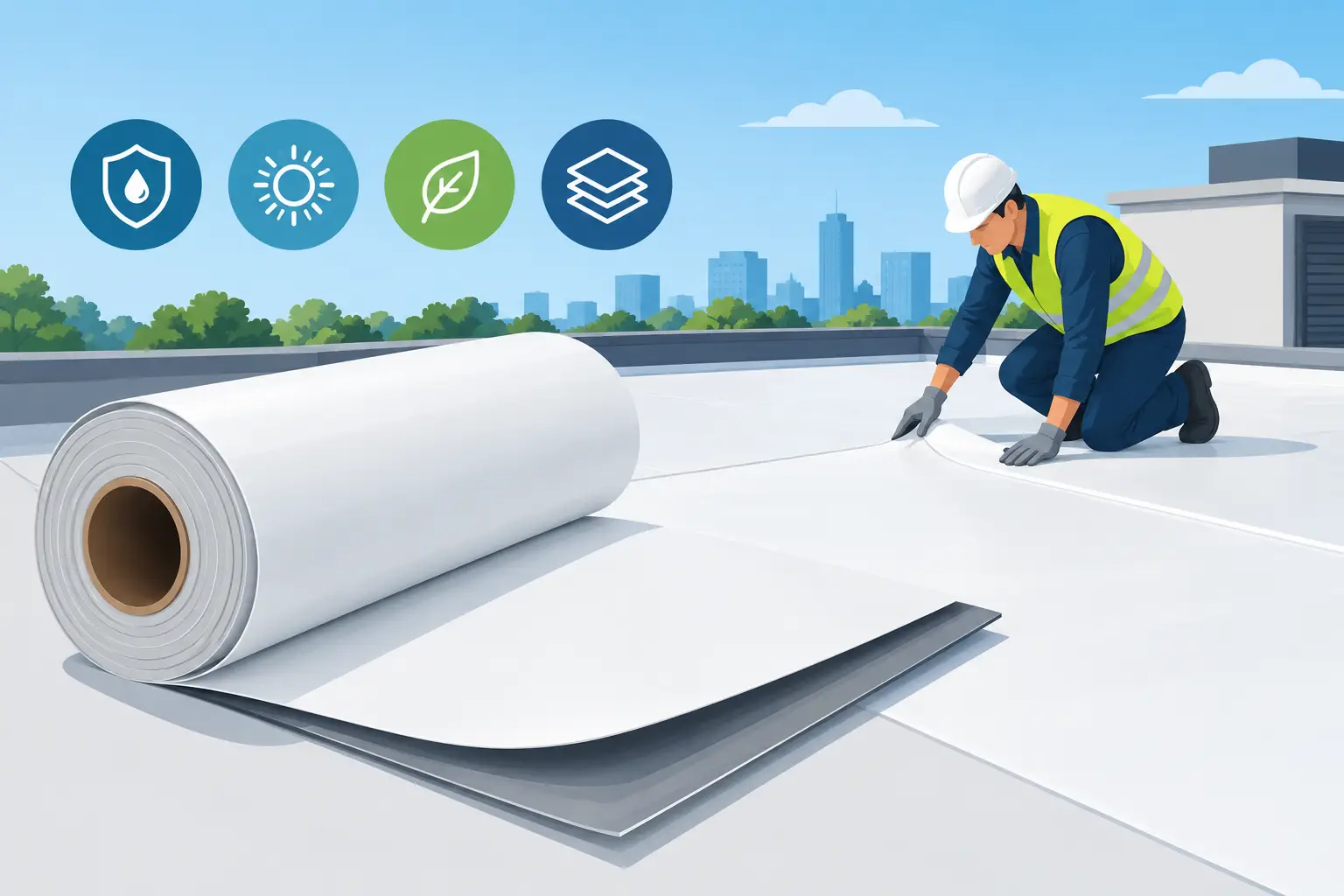
A low-slope roof can look fine from the ground while water is working its way through an aging seam, failed flashing, or soft insulation below the surface. Knowing how to choose TPO membrane starts with more than selecting a white sheet and a thickness. The right system has to fit your building, drainage conditions, budget, expected traffic, and the condition of the existing roof.
TPO, or thermoplastic polyolefin, is a single-ply membrane commonly used on commercial buildings and other low-slope roofs. It is valued for its heat-welded seams, reflective surface, and practical balance of cost and performance. But not all TPO systems are equal, and the lowest initial quote is not always the best value over the life of the roof.
Start With a Complete Roof Evaluation
Before choosing a membrane, determine what is underneath the current roof. A contractor should inspect the roof deck, existing insulation, drainage paths, penetrations, flashings, perimeter edges, and any areas showing ponding water or recurring leaks.
This inspection determines whether the roof can be restored, whether a new membrane can be installed over the existing system, or whether a complete tear-off is the responsible choice. Installing a new roof over wet insulation or deteriorated materials may reduce upfront cost, but it can trap problems beneath the new membrane and lead to premature failure.
For building owners in Michigan, drainage deserves special attention. Freeze-thaw cycles, heavy rain, and snow accumulation can expose weak points quickly. TPO handles standing water better than many people assume, but the roof should still drain properly. Persistent ponding can shorten the service life of seams, flashings, and insulation components.
How to Choose TPO Membrane Thickness
TPO membrane is commonly available in 45-mil, 60-mil, and 80-mil thicknesses. Thicker is not automatically necessary, but it generally provides more material to withstand weathering, maintenance activity, and incidental damage.
A 45-mil membrane may work for a smaller roof with limited foot traffic and a straightforward layout. It can be a budget-conscious choice when the roof has good drainage and few mechanical units. However, it has less material available for long-term wear and future repairs.
For many commercial properties, 60-mil TPO is the practical middle ground. It offers stronger puncture resistance and more durability around drains, rooftop equipment, and service paths without the highest material cost. It is often a sensible choice for offices, retail buildings, and light industrial properties.
An 80-mil membrane is worth considering when the roof sees frequent maintenance traffic, has many HVAC units, or faces a higher risk of punctures. The added thickness can also make sense for owners planning to hold the building for many years and looking for a longer-term roofing investment.
Thickness matters, but it is only one part of the system. A well-installed 60-mil roof with properly welded seams and sound insulation is a better investment than a poorly installed 80-mil roof.
Choose the Right Attachment Method
TPO membranes can be mechanically attached, fully adhered, or held in place with ballast in certain applications. Each approach has different cost, performance, and installation considerations.
Mechanically attached TPO uses fasteners and plates along the membrane sheets, with the next sheet welded over the attachment row. This is a common approach because it is efficient and can perform well when engineered for local wind conditions. On some roofs, the fastening pattern may be visible as slight rows or ridges across the membrane.
Fully adhered TPO is bonded to the insulation or approved substrate with adhesive. It creates a smoother appearance and can be a good choice for roofs where wind uplift, appearance, or building use calls for a more uniform system. Adhesive application requires proper weather conditions and careful surface preparation, so workmanship is especially important.
The best attachment method depends on the roof deck, building height, exposure, insulation plan, and wind-uplift requirements. A detailed estimate should identify the attachment method rather than simply stating that TPO will be installed.
Match the Insulation to the Roof’s Needs
The membrane is the weatherproof surface, but insulation plays a major role in energy performance, drainage, and roof longevity. Polyiso insulation is common beneath TPO systems because it provides strong thermal performance and can be installed in multiple layers with staggered joints.
If the existing roof has poor drainage, tapered insulation may be used to direct water toward drains, scuppers, or gutters. This can add cost compared with a flat insulation layout, but it may solve the underlying reason a roof continues to hold water after storms.
The right insulation thickness depends on the building, local energy requirements, and how the roof is currently constructed. A contractor should also address vapor concerns where applicable, especially when adding insulation over an existing assembly. The goal is not just to create a white surface on top of the building. It is to build a roof system that manages water and temperature correctly from the deck upward.
Look Closely at Seams and Flashings
One major advantage of TPO is that its seams are heat-welded rather than glued or taped. When the welding is done correctly, the seams can be stronger than the membrane itself. When it is rushed, contaminated, or set at the wrong temperature, a seam can become a leak path.
Ask how seams will be tested during installation. A qualified crew checks welded seams using a probe after they cool, looking for voids or incomplete welds. Details around curbs, pipes, drains, walls, and equipment supports need the same attention as the large open areas of the roof.
Most roof leaks do not begin in the middle of a field sheet. They often start at a transition, penetration, drain, or edge condition. Choosing a contractor with experience in TPO details is as important as choosing the membrane brand.
Consider Foot Traffic and Future Repairs
A roof with several mechanical units needs a different approach than a roof that is rarely accessed. Service technicians walking to HVAC equipment can scuff or puncture a membrane over time, especially when tools and parts are carried across it.
Walkway pads should be installed in regular access routes and around service areas. These pads protect the membrane without changing the roof’s drainage design. They are a small part of the overall project, but leaving them out can create unnecessary repair needs later.
Also consider whether the building is likely to receive new equipment, conduit, vents, or other rooftop additions. Future penetrations should always be flashed by a roofing professional. Cutting into a single-ply roof without proper materials and heat-welded detailing can void warranty coverage and create a difficult leak to trace.
Compare Warranty Terms, Not Just Warranty Length
A long warranty can provide peace of mind, but the number of years does not tell the whole story. Review what the warranty covers, who provides it, whether inspections are required, and what conditions can exclude coverage.
Manufacturer warranties generally depend on approved materials, correct installation methods, and a contractor authorized to install that system. Workmanship coverage is separate and should be clearly stated in writing. A transparent roofing estimate should identify the membrane thickness, insulation approach, attachment method, flashing scope, tear-off or overlay plan, disposal, and warranty information.
Be cautious of a vague proposal that lists only a square-foot price. It may leave out edge metal, drains, wet-insulation replacement, walkway pads, decking repairs, or other items that affect the finished roof and final cost. Clear line items reduce surprises once work begins.
Decide Whether Replacement or Restoration Makes More Sense
TPO replacement is not the only answer for every low-slope roof. If an existing membrane is still structurally sound, dry beneath the surface, and not failing at seams or flashings, a roof coating system may be a more affordable way to extend its useful life.
Restoration is not appropriate when the roof has widespread trapped moisture, major membrane deterioration, failing insulation, or drainage problems that have not been corrected. In those cases, coating over the roof may delay a necessary replacement rather than solve the problem.
A local inspection should give you an honest comparison of both options. DLR Construction helps building owners evaluate whether a complete TPO replacement, targeted repair, or roof restoration fits the actual condition of the roof.
Choose Installation Quality Over a Shortcut
TPO can be an excellent low-slope roofing system, but its performance depends on the complete assembly and the people installing it. The best choice is a membrane thickness and attachment method that fit your building, paired with dry insulation, proper drainage, careful flashing work, and a written scope that leaves no surprises.
If your roof is leaking, holding water, or nearing the end of its service life, a free estimate can turn an uncertain situation into a clear plan. A careful inspection now is easier and less disruptive than waiting for a small roof issue to become interior damage.