

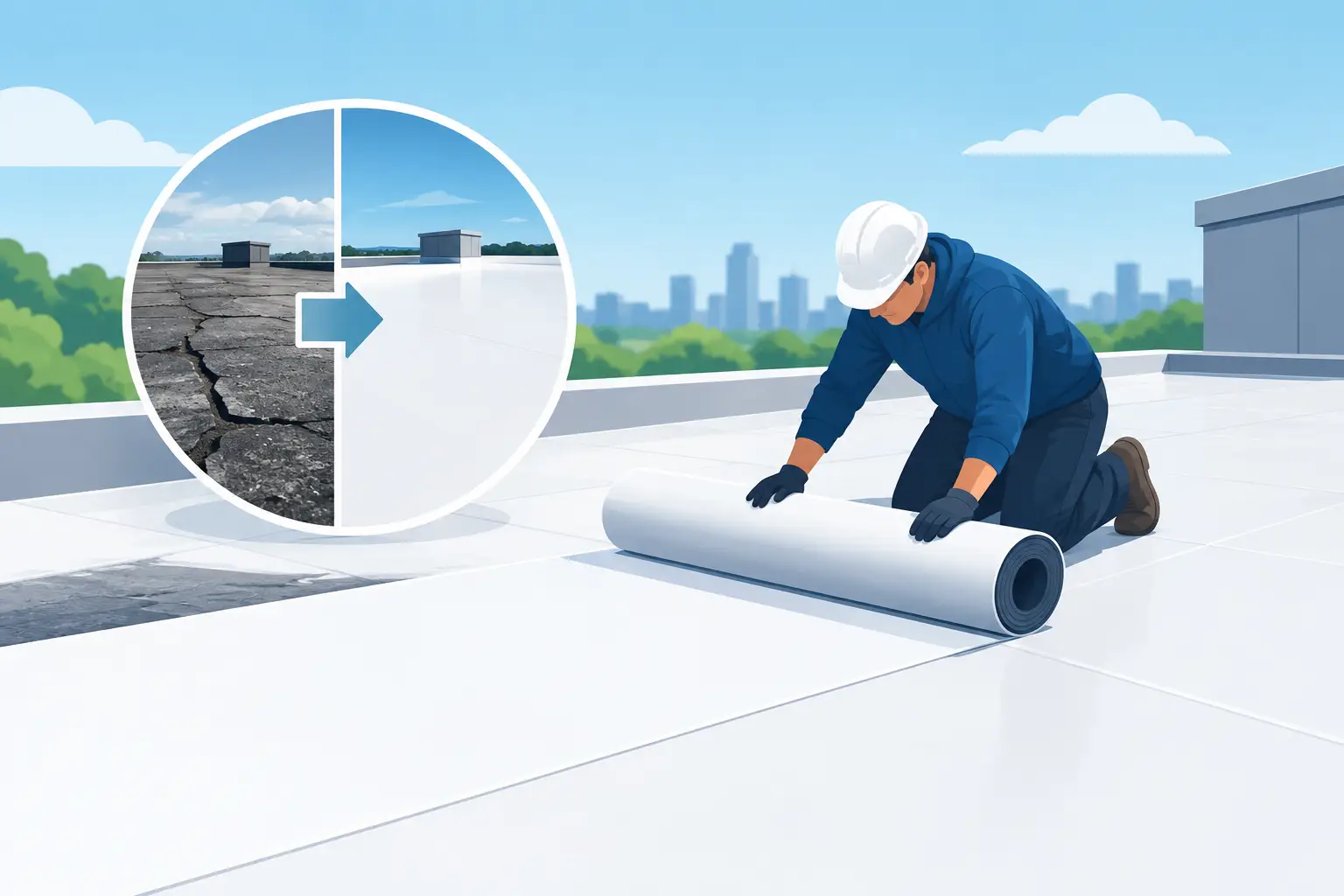
A flat-roof leak rarely stays a small problem for long. Water can travel beneath the membrane, saturate insulation, stain ceilings far from the entry point, and interrupt business operations before the source is obvious. A Howell TPO replacement may be the right answer when repairs have become repetitive, the existing membrane is aging, or moisture has reached the layers below the roof surface.
The right decision is not always automatic. Some low-slope roofs can be repaired or restored successfully, while others need a complete tear-off and new membrane system. The difference comes down to the roof’s condition, its drainage, the condition of the insulation and deck, and whether a repair will truly provide reliable protection.
What TPO Does for a Low-Slope Roof
TPO, or thermoplastic polyolefin, is a single-ply membrane commonly used on commercial and residential low-slope roofs. The membrane is installed in broad sheets, with seams heat-welded together to form a continuous waterproof surface. Properly installed seams are one of the system’s major strengths, but their performance depends on trained installation and careful preparation below the membrane.
A TPO roof system is more than the visible white surface. It may include insulation, cover board, adhesive or mechanical fasteners, perimeter edge metal, flashing, drains, and penetrations around equipment or vents. Failure in any of these areas can lead to leaks. That is why a contractor should inspect the full assembly rather than assuming every problem is simply a split in the membrane.
For many Howell building owners, reflective TPO is a practical choice because it is designed for low-slope applications and can help limit heat absorption during warm weather. Still, material selection should follow a close review of the building and its existing roof, not a one-size-fits-all recommendation.
Signs a Howell TPO Replacement May Be Needed
An active leak deserves attention quickly, but one leak does not always require replacement. A localized puncture, open seam, damaged pipe flashing, or edge detail problem may be repairable if the surrounding membrane and insulation remain dry and sound.
Replacement becomes a more likely recommendation when the roof shows widespread deterioration or when past repairs are no longer holding. Warning signs include recurring leaks in different locations, loose or failed seams, brittle or heavily weathered membrane, widespread ponding water, large areas of patched material, bubbling that suggests trapped moisture, and wet insulation found during testing or exploratory work.
The roof’s age matters, but condition matters more. A roof can look acceptable from the ground and still have concealed moisture below the membrane. Conversely, a roof approaching the later part of its expected service life may remain a candidate for restoration if it is dry, stable, and has limited damage. A dependable inspection should explain what was found and why it supports repair, restoration, or replacement.
Tear-Off, Recover, or Restoration?
There are three common paths for an aging TPO roof: targeted repair, restoration or recoating, and replacement. Each has a place, and the lowest initial price is not always the best value.
When targeted repair is enough
A repair makes sense when damage is isolated and the existing system is generally in good condition. Correcting a failed seam or flashing issue promptly can protect the roof assembly and avoid larger damage. The key is confirming that water has not spread into insulation or the deck.
When restoration is worth considering
A roof coating or recoating system can be a lower-cost, eco-friendly alternative to replacement when the existing membrane is structurally sound. Restoration may address surface aging and add a renewed protective layer without creating the disruption and disposal associated with a complete tear-off.
It is not a shortcut for a roof with widespread wet insulation, poor drainage, failing details, or serious membrane breakdown. Coating over an unsuitable roof can delay the real work while allowing damage to continue below the surface.
When a full replacement is the better investment
A Howell TPO replacement is often the sounder long-term choice when moisture is widespread, the roof has been patched repeatedly, or the existing system has reached the point where dependable repairs are no longer realistic. A complete tear-off allows the contractor to inspect the deck, remove compromised insulation, correct hidden defects, and install a new system on a properly prepared substrate.
In some cases, a recover system may be possible, with a new membrane installed over an existing roof assembly. This can reduce tear-off costs and project disruption, but only if the existing roof is dry, securely attached, and acceptable under local code and manufacturer requirements. It also adds another layer to the building, which can make future work more complicated. A detailed inspection should determine whether recovering is appropriate rather than treating it as a default cost-saving option.
Drainage and Insulation Cannot Be Afterthoughts
Many flat-roof problems are really water-management problems. TPO is designed to shed water, but standing water that remains for extended periods puts extra stress on seams, flashing, and roof details. Clogged drains, undersized scuppers, poor slope, or settled insulation can all contribute to ponding.
During replacement planning, drainage should be evaluated alongside the membrane. The solution might involve cleaning and improving drainage paths, adjusting roof slopes with tapered insulation, or addressing areas where water consistently collects. The exact approach depends on the building layout and what the inspection reveals.
Insulation also affects more than energy use. Wet insulation loses performance and can hold moisture against the roof assembly. During a tear-off, replacing damaged insulation and installing a suitable cover board can create a stronger, more stable base for the new membrane. Those details affect how the completed roof performs through Michigan rain, snow, ice, and temperature swings.
What a Clear TPO Replacement Estimate Should Cover
A property owner should be able to understand what is included before work starts. Vague proposals make it difficult to compare contractors and leave room for unwanted surprises after the project is underway.
A useful line-item estimate should identify the membrane system, insulation or cover board work, tear-off scope, disposal, flashing details, edge metal, drain or penetration work, protection for the property, cleanup, and warranty information. It should also explain how concealed deck damage or additional wet materials will be handled if they are discovered after removal.
Ask whether the proposal includes removal of all existing roof layers or assumes a recover installation. Clarify how the contractor will protect entrances, landscaping, vehicles, and tenant areas during the project. For occupied commercial buildings, scheduling and communication are part of the work. A professional crew should plan for access, debris control, daily cleanup, and weather protection, not simply arrive with materials and begin tearing off the roof.
Choosing a Local Contractor for the Work
TPO replacement is specialized work. Heat-welded seams, flashing transitions, roof edges, drains, and penetrations need consistent attention because these details are where many leaks begin. Look for a licensed and insured local roofing contractor that can explain the proposed system in plain language and stand behind the work after installation.
DLR Construction provides inspections and detailed estimates for low-slope TPO and EPDM roofing projects in the Howell area. The goal is not to push replacement when a repair or restoration will do. It is to identify the condition of the full roof assembly and recommend work that protects the building without leaving unanswered questions.
Before approving any project, walk the roof concerns with the contractor if possible, review the estimate line by line, and ask what condition would change the scope once the existing roof is opened. A free estimate should give you enough clarity to make a confident decision, whether the next step is a focused repair, restoration, or a complete new TPO roof.