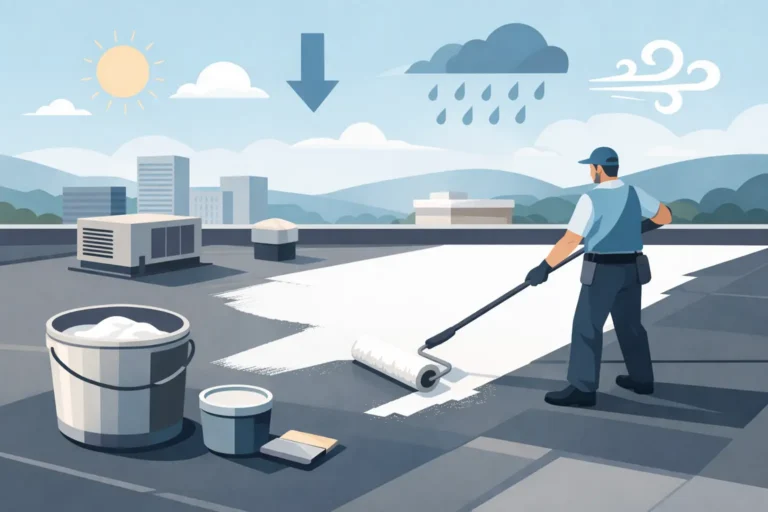


A flat-roof leak rarely starts as a dramatic opening. More often, water works its way through an aging seam, a damaged flashing detail, or a low area that holds water after every rain. A properly planned EPDM roof installation addresses those details before the membrane goes down, giving a commercial building a dependable waterproofing system instead of a short-term patch.
EPDM is a synthetic rubber membrane commonly used on commercial and low-slope roofs. It can be an excellent fit for offices, warehouses, retail buildings, apartment properties, and other structures with low-slope roof areas. Its performance, however, depends on the condition of the roof deck, drainage design, insulation, attachment method, and workmanship at every seam and penetration.
When EPDM Is the Right Low-Slope Roof System
EPDM is valued for its flexibility, weather resistance, and long service life when it is installed and maintained correctly. The material handles temperature changes well, which matters in Michigan where roofs can see summer heat, heavy rain, freeze-thaw cycles, snow, and ice in the same year.
It is not automatically the right answer for every building. A roof with widespread wet insulation, failing decking, poor drainage, or structural concerns needs those underlying problems addressed first. In some cases, a restoration coating may be a practical lower-cost option if the existing roof is dry and structurally sound. In other cases, a complete tear-off and new membrane system is the more responsible investment.
A professional roof inspection should identify whether the existing system can be recovered, whether wet materials must be removed, and whether drainage improvements are needed. Those decisions affect both the price and the expected service life of the finished roof.
EPDM Roof Installation Starts Below the Membrane
The visible black or white membrane is only one part of the system. Long-term performance begins with the roof deck and the layers beneath the membrane.
Inspection, Moisture Checks, and Tear-Off Decisions
Before installation, the contractor evaluates the deck, insulation, perimeter edges, drains, curbs, penetrations, and flashing areas. Soft spots, stained ceiling areas, recurring leaks, and ponding water can point to hidden moisture below the existing surface.
A complete tear-off removes old membrane and saturated insulation so the deck can be inspected and repaired as needed. This is often the best choice when water has entered the existing system or when multiple old roof layers make a recover installation unsuitable. A recover system may save disposal costs and reduce project time, but only when the existing roof is dry, stable, and approved for that application.
There should be no guessing about this scope. A detailed estimate should state whether the project includes tear-off, how many layers will be removed, deck repairs if needed, disposal, and protection of the property during construction.
Insulation and Drainage Planning
Insulation does more than improve energy efficiency. It creates a stable, smooth surface for the membrane and can help correct low areas through tapered insulation design. On a low-slope roof, water needs a clear path to interior drains, scuppers, or gutters.
No membrane is designed to compensate for a roof that holds standing water for extended periods. Ponding water can collect debris, stress seams, and reveal drainage problems that were never corrected. If a roof has persistent low spots, the contractor should discuss whether tapered insulation, drain improvements, or substrate repairs are appropriate before installation begins.
How an EPDM Membrane Is Installed
Once the substrate is clean, dry, and properly prepared, the installation method is selected based on the building, roof design, membrane type, and manufacturer requirements. Common systems include fully adhered, mechanically attached, and ballasted EPDM. For many commercial properties, a fully adhered system provides a clean finished appearance and strong wind resistance when installed to specification.
With a fully adhered application, approved bonding adhesive is applied in controlled sections. The membrane is positioned carefully, allowed to relax as required, and rolled into the adhesive to promote full contact. Rushing this process or installing over damp surfaces can lead to adhesion problems later.
Membrane sheets are joined at seams using manufacturer-approved seam tape or adhesive. Seams require clean, prepared surfaces and consistent pressure. Dirt, moisture, wrinkles, or poor overlap can create weak points, which is why seam work deserves close attention during any EPDM installation.
Flashing Is Where Workmanship Shows
Most roof leaks occur at transitions, not in the open field of the membrane. Pipes, HVAC curbs, skylights, parapet walls, drains, scuppers, and roof edges all need compatible flashing details.
EPDM flashing materials are shaped and secured around these areas to keep water moving over the roof surface rather than behind the membrane. Termination bars, edge metal, sealant, pipe boots, and reinforced corners must be installed in the correct sequence. A roof can look finished from the ground while still having a vulnerable detail at a penetration or wall transition.
This is why comparing estimates only by total price can be misleading. Property owners should know what flashing work, edge details, drain work, and warranty coverage are included. A lower number that leaves out necessary preparation or detail work can become expensive after the first major storm.
Weather and Jobsite Conditions Matter
EPDM installation should be scheduled around suitable weather conditions. Adhesives, primers, seam products, and sealants have temperature and moisture requirements. The roof surface must be dry, and crews need enough workable weather to complete sections correctly and protect exposed areas.
That does not mean a commercial roof project must wait for perfect weather. Experienced crews plan the work in manageable phases, monitor forecasts, and secure the building at the end of each day. Still, owners should be cautious of anyone who treats wet substrate conditions or rushed seam work as normal practice.
During a tear-off, there may be noise, temporary access changes, and equipment near the building. Good jobsite management includes protecting landscaping and exterior areas, keeping debris controlled, coordinating around tenant or business operations when possible, and completing a thorough cleanup.
What Affects EPDM Roof Installation Cost
The square footage of the roof is only one part of the cost. A simple open roof with good drainage and limited penetrations requires less labor than a roof with numerous curbs, drains, wall transitions, and failing insulation.
Cost is also influenced by whether the project requires a complete tear-off, deck repair, new insulation, tapered insulation, drain modifications, or replacement of damaged edge components. Building access matters too. A roof that requires extra staging, material handling, or protection for occupied spaces may take more time than an easily accessible structure.
The right question is not simply, “What does EPDM cost per square foot?” It is, “What system is being installed, what problems are being corrected, and what is included in the written scope?” A transparent line-item estimate gives building owners a clearer way to compare proposals without surprises.
Protecting a New EPDM Roof
A new roof still needs routine attention. Seasonal inspections can catch loose edge details, debris around drains, punctures from service work, and sealant issues before they become interior leaks. After severe wind, hail, or a major storm, it is wise to inspect the roof surface and document visible damage promptly.
Building maintenance crews and HVAC technicians should avoid dragging equipment across the membrane or leaving sharp materials on the roof. When foot traffic is common, designated walk pads can help protect high-traffic areas. Small issues are generally easier and less costly to repair before water enters the system.
For property owners in Durand and nearby communities, DLR Construction can evaluate existing low-slope roof conditions and provide a free estimate that explains the recommended scope, not just the final number. The best time to plan an EPDM project is while you still have choices – before a small leak turns into wet insulation, interior damage, and an urgent replacement decision.