
A roof proposal can look straightforward until you compare two contractors and find a large difference in price, materials, or what is actually included. Understanding roofing bid versus estimate helps you compare the work, not just the bottom-line number. That matters whether you are dealing with a leaking home roof, storm damage, or a low-slope commercial roofing project.
The terms are often used interchangeably, and in many cases a contractor may call the same document either a bid or an estimate. Still, the wording can signal how firm the price is, how thoroughly the roof has been inspected, and what may happen if hidden damage is found after work begins. The document itself matters more than its label.
Roofing Bid Versus Estimate: The Basic Difference
An estimate is a contractor’s good-faith projection of the expected cost to complete a roofing project. It is based on visible conditions, roof measurements, chosen materials, labor, disposal, and other known parts of the job. An estimate may change if the contractor finds concealed conditions that could not reasonably be seen during the initial inspection.
A bid is generally a more definite offer to perform a defined scope of work for a stated price. It is often used when the project requirements are clear, such as a commercial property manager requesting pricing for a specified TPO or EPDM roof system. Once accepted, a bid may become part of a contract.
In practice, the distinction depends on the contractor and the project. A thorough residential roof replacement estimate can be very close to a fixed bid when the roof deck, access, existing layers, ventilation, and materials are well understood. On the other hand, even a document titled “bid” should account for unknown conditions. No honest roofer can see every section of roof decking without removing the existing roofing material.
The question to ask is not only, “Is this a bid or an estimate?” Ask, “What work is included, what could change the price, and how will I be notified before extra work is done?”
What a Dependable Roofing Estimate Should Include
A useful estimate gives you enough detail to know what you are buying. A one-line price for “new roof” leaves too much room for misunderstanding. It may not tell you whether the old roofing will be removed, what underlayment is included, how flashing will be handled, or who is responsible for cleanup.
For a typical shingle roof replacement, the written scope should identify the shingles and underlayment, the number of existing layers being removed, and the treatment of critical areas such as valleys, wall transitions, chimneys, skylights, pipe boots, and eaves. It should also address ventilation when appropriate. Proper intake and exhaust ventilation can affect roof performance and manufacturer warranty requirements.
The estimate should also explain property protection. Roofing is active, physical work. A professional crew should describe how it will protect landscaping, siding, driveways, and other vulnerable areas around the building. Cleanup and disposal deserve the same attention. Confirm whether tear-off debris, dumpster fees, and magnetic nail cleanup are included in the stated price.
For commercial low-slope roofs, the scope needs even more system-specific detail. A clear proposal should identify whether the work involves repair, tear-off and replacement, or restoration. It should describe the membrane or coating system, insulation work if needed, flashing details, drain or scupper conditions, edge metal, and any areas requiring substrate repair. A coating restoration may be a cost-conscious solution when the existing roof is sound enough to restore, but it is not the right answer for every roof.
Why Two Prices Can Be Far Apart
A lower number is not automatically a better deal, and a higher number is not automatically better workmanship. The difference often comes down to scope.
One contractor may price a full tear-off, while another intends to install over an existing layer. One may include ice and water protection at eaves and valleys, while another lists only basic underlayment. One may include replacement of damaged decking at a stated per-sheet rate, while another has not addressed decking at all. These are not minor differences when Michigan weather brings ice, wind, heavy rain, and freeze-thaw cycles.
The same issue arises on flat and low-slope commercial roofs. A proposal for a patch repair should not be compared directly with a proposal for a full membrane replacement. Likewise, a restoration coating price may look much lower than replacement because it is a different solution with different requirements and expected service life.
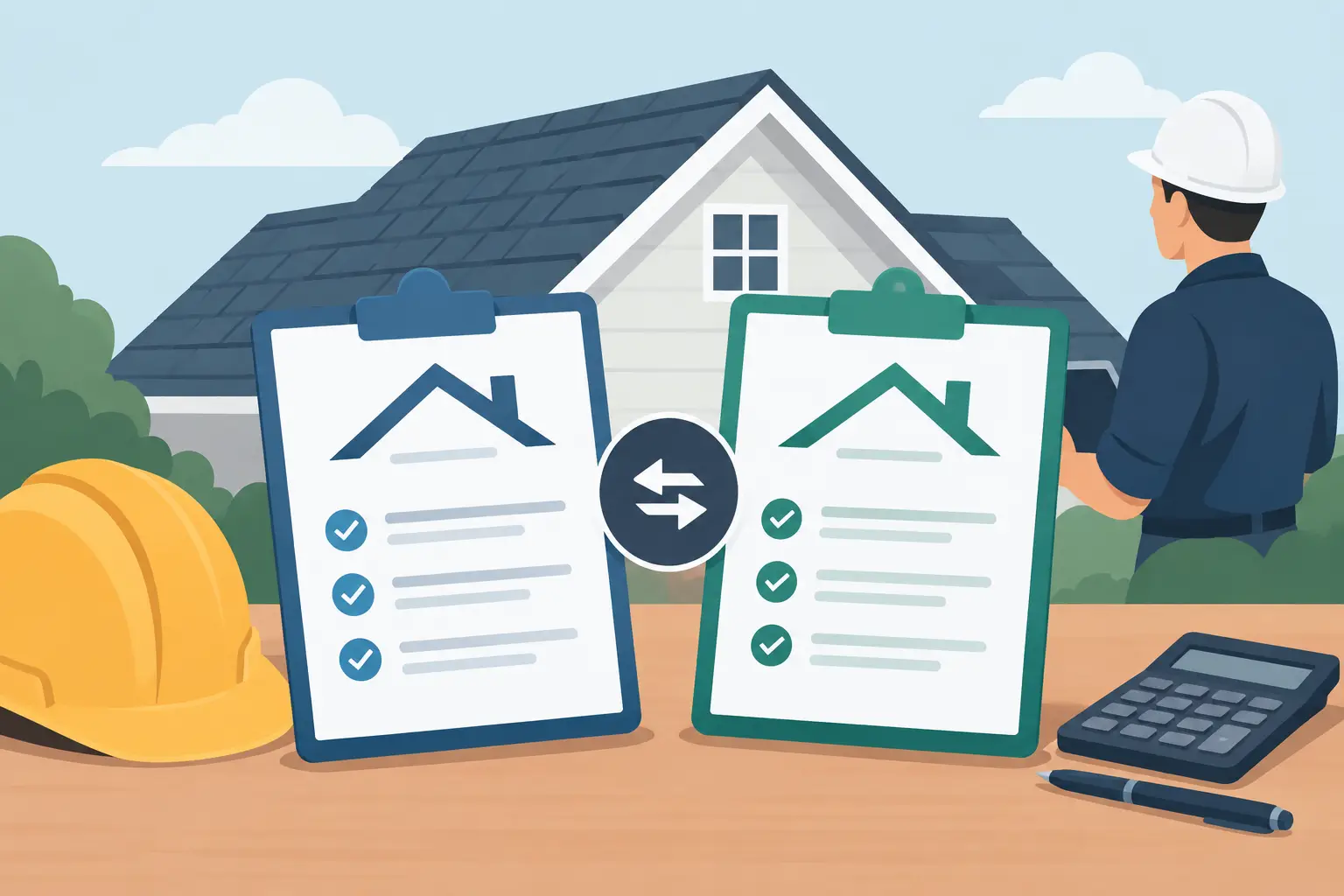
When comparing documents, place them side by side and look at the materials, installation method, labor, removal, disposal, flashing, warranty, and exclusions. If the scope does not match, the prices are not truly comparable.
Hidden Damage and Change Orders
Roofing estimates are prepared from what can be seen before tear-off. A contractor can inspect the attic, look for signs of sagging or moisture, and check the roof surface carefully, but concealed deck damage may not become visible until old shingles or membrane are removed.
This is where clear communication matters. A written estimate should state how unforeseen repairs are handled. For example, it may list a per-sheet price for replacing rotten roof decking or state that additional work requires owner approval through a change order. A change order is simply written documentation that explains the newly discovered condition, the added work, and the associated cost.
Do not expect a contractor to absorb every hidden repair at no cost. At the same time, you should not be surprised with unapproved charges after the work is finished. The fair approach is to document the condition, explain the options, provide pricing, and get approval before proceeding whenever the situation allows.
Storm and insurance-related work can add another layer. Your insurer may approve a certain scope, while the roof may require additional code-related work or repairs discovered during installation. Keep copies of the estimate, insurance paperwork, photos, and change orders. A contractor experienced with storm-damage roofing can help explain the roofing scope clearly, but the insurance carrier determines coverage.
How to Evaluate a Roofing Bid or Estimate
Start with the contractor, not just the paperwork. Verify that the company is licensed and insured, has a local track record, and can explain who will oversee the project. A roofing project is a major investment, and direct accountability matters when questions arise before, during, or after the installation.
Then read the proposal from top to bottom. Make sure it identifies the exact building or roof sections involved. Confirm the material manufacturer and product line, not merely a generic description. Review warranty information closely, including the difference between a material warranty and a workmanship warranty. They cover different things.
Pay attention to exclusions. Common exclusions may include structural framing repairs, extensive deck replacement, chimney masonry repair, gutter work, interior water damage, and work outside the listed roof areas. Exclusions are not necessarily red flags. They become a problem only when they are vague or when the contractor cannot explain them.
You should also understand the payment schedule. Avoid arrangements that demand the full project cost before materials arrive or work begins. A reasonable schedule should match clear project milestones and be stated in writing.
Questions Worth Asking Before You Sign
A few direct questions can prevent most estimate-related confusion. Ask whether the price includes tear-off, disposal, flashing work, and cleanup. Ask what happens if damaged decking or wet insulation is discovered. Ask who will communicate with you during the job and whether the project will be protected if weather moves in.
For commercial buildings, ask whether repair, restoration, and replacement options have all been considered. The lowest immediate cost is not always the lowest long-term cost, especially when recurring leaks affect operations, inventory, tenants, or interior finishes.
A contractor should be able to answer these questions in plain language. If you receive vague answers or feel pressured to sign before you understand the scope, pause and request clarification.
The Best Document Is a Clear One
Whether it is labeled a bid, estimate, proposal, or contract, the best roofing document is specific, understandable, and backed by a contractor who stands behind the work. It should tell you what will happen to your roof, what you will pay for known work, and how unforeseen conditions will be handled.
For homeowners and property managers in the Durand area, a free, detailed estimate is a practical starting point. Ask for a line-item scope, review it carefully, and choose the local roofing contractor that gives you clear answers before the first shingle or membrane section is removed.