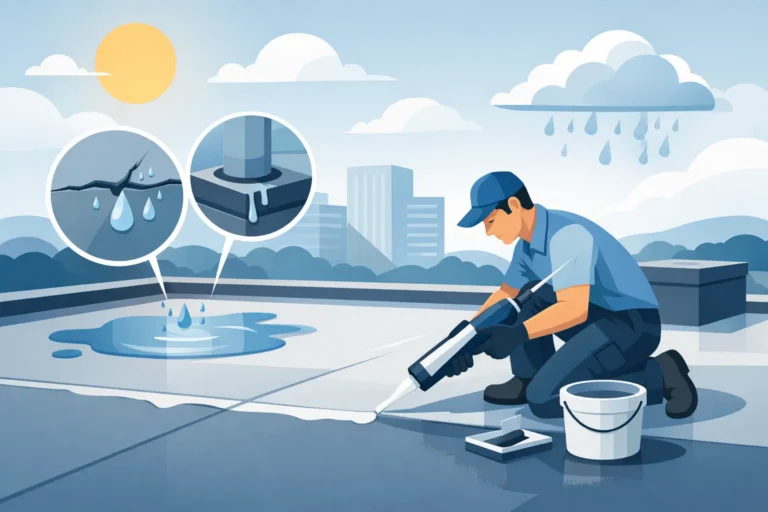


A water stain on the ceiling is rarely where the problem began. Water can travel along roof decking, rafters, insulation, or a wall cavity before it becomes visible indoors. Effective roof leak detection traces that path back to the actual entry point, helping prevent a manageable repair from becoming damaged framing, mold growth, ruined insulation, or interior repairs.
For homeowners and building managers, the goal is not simply to stop the drip for today. It is to identify why water got past the roofing system, determine how far the moisture has traveled, and choose a repair that fits the roof’s condition and remaining service life.
Roof Leak Detection Starts With the Right Clues
A ceiling stain, bubbling paint, damp drywall, or musty odor gives an inspector a starting point, not a diagnosis. The location of the interior symptom can be several feet away from the leak, especially on a sloped roof. On a low-slope commercial roof, water may move across the deck or collect beneath insulation before appearing at a seam, wall, or ceiling penetration.
The timing of the leak matters, too. A leak that appears only during wind-driven rain often points to flashing, shingles, wall transitions, or an exposed penetration. Water that shows up after a long, steady rain may be entering through worn roofing material, a compromised seam, a slow-draining area, or an opening around a vent or pipe.
In Michigan, reports of a leak during a thaw can also require a closer look at ice buildup, attic insulation, ventilation, and the roof edge. Melting snow can back up under roof coverings when drainage is blocked by ice. That does not automatically mean the entire roof has failed, but it does mean the cause should be inspected instead of covered with a temporary patch.
What a Professional Roof Inspection Checks
A reliable inspection combines interior and exterior observations. The roof surface matters, but so do the areas where materials change direction, meet a wall, or surround an opening. These transition points are where many leaks begin.
Inside, the inspection may include the attic, if accessible. Damp insulation, darkened roof decking, water marks on framing, rusted fasteners, and daylight at penetrations can help narrow the search. An attic review also helps separate a roof leak from condensation caused by poor ventilation or air leakage from the living space.
Outside, a roofing professional checks the condition and installation of the roof system. On shingle roofs, that can include missing or lifted shingles, exposed nail heads, damaged pipe boots, deteriorated sealant, open valleys, chimney flashing, skylight flashing, and debris that prevents proper drainage. Hail or wind damage may be apparent, but subtle damage often takes a trained eye to connect with an active leak.
For TPO and EPDM commercial roofs, the inspection focuses on membrane seams, field material, edge details, drain areas, rooftop equipment curbs, pipe penetrations, flashing, and signs of ponding water. A small opening at a seam or termination can allow water beneath the membrane, where it may spread beyond the visible damage. The repair approach depends on whether the membrane is otherwise sound and whether the underlying insulation or deck has been affected.
Why the First Visible Stain Can Be Misleading
It is tempting to place a bucket under a drip, seal the nearest crack, and assume the problem is solved. That approach can work for a very obvious puncture, but it often misses the source. A pipe boot may leak near the ridge while water follows framing and stains a ceiling near an exterior wall. A failed wall flashing detail can send water behind siding and into the roof assembly.
This is why good leak detection is methodical. The inspector compares the interior water pattern with the roof layout, penetrations, valleys, walls, and drainage paths above it. They also consider recent weather. If the leak followed a storm with high winds from one direction, that information can make the inspection more precise.
When conditions allow, controlled water testing can help confirm a suspected entry point. This should be done carefully and in stages. Spraying the entire roof at once creates more confusion because water can enter in several places or run beneath materials before it appears inside. Testing one section at a time makes it easier to verify the cause.
Common Leak Sources on Homes and Commercial Buildings
Roofing materials can age, but leaks frequently begin at details rather than in the middle of the roof. Flashing around chimneys, walls, skylights, vents, and equipment penetrations has to direct water onto the roof surface. If flashing is loose, corroded, improperly integrated, or sealed with failing caulk, water can find its way underneath.
Drainage is another major factor. Clogged gutters can force water over the roof edge or behind fascia. On flat and low-slope roofs, blocked drains and scuppers can leave standing water against seams and penetrations. Ponding water does not always mean immediate failure, but it shortens the margin for error and should be evaluated.
Age and prior repairs also matter. A roof with scattered patches, brittle shingles, repeated sealant repairs, or membrane seams that are losing adhesion may be repairable in the short term. However, repeated leaks across different areas can signal that a larger repair, restoration, or replacement is the more responsible investment. A clear inspection should explain that distinction without pressuring the owner into work that does not fit the roof’s actual condition.
When a Repair Makes Sense and When It Does Not
A targeted repair is often the right answer when the leak comes from a localized issue and the rest of the roof still has dependable service life. Examples include a damaged pipe boot, displaced flashing, a storm-related shingle loss, or a limited membrane seam failure. The repair should restore the correct water-shedding detail, not merely add surface sealant over the symptom.
Replacement becomes more reasonable when the roof has widespread deterioration, multiple active leaks, failing materials across large areas, or damage that extends into the roof deck and insulation. For commercial buildings, an inspection may also show that a restoration coating is a practical option when the existing roof is stable, dry where it needs to be, and suitable for recoating. Restoration can reduce disruption and cost compared with a tear-off, but it is not the right fix for every roof.
The best decision depends on the roof type, age, maintenance history, moisture findings, and budget. A detailed line-item estimate makes the options easier to compare. It should define the repair scope, protection of the property, cleanup, disposal when needed, and warranty information. That clarity helps avoid surprises after work begins.
What to Do While You Wait for an Inspection
If water is actively entering the building, protect people and property first. Move furniture, electronics, inventory, and valuables away from the affected area. Use a container to catch drips, and take photos or video of the stain, active water, and any exterior storm damage before making temporary changes. Those records may be helpful for an insurance claim.
Avoid climbing onto a wet, icy, steep, or visibly damaged roof. A tarp may be appropriate in an emergency, but improperly secured tarps can create more damage or place someone at risk. Do not puncture a bulging ceiling unless you understand the hazards involved and can safely control the water. If electrical fixtures, outlets, or wiring are near the leak, shut off power to that area if it is safe to do so and contact a qualified professional.
For property owners in Durand, Byron, Gaines, Swartz Creek, Howell, Fowlerville, and Williamston, prompt local inspection can make a meaningful difference after heavy rain, wind, hail, or a freeze-thaw cycle. DLR Construction provides free estimates built around the actual condition of the roof, so owners can understand whether they need a focused repair, restoration work, or a larger project.
A roof leak does not wait for a convenient season. Address the first stain, odor, or drip early, ask for the source to be explained clearly, and choose a repair plan that protects the building rather than simply hiding the evidence.