

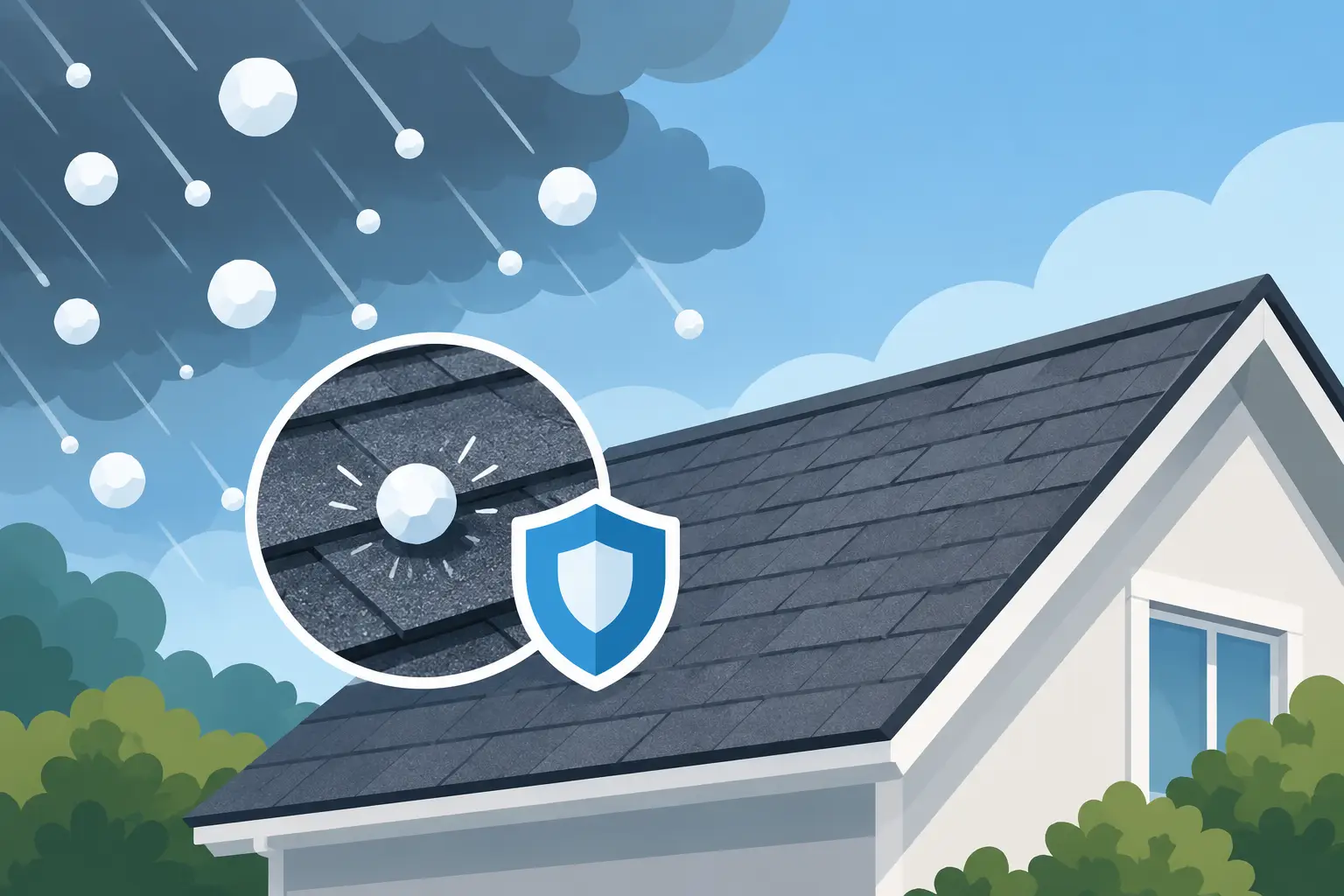
A Michigan hailstorm can leave a roof looking almost normal from the driveway while causing damage that shows up months later as lost granules, weakened shingles, or a leak around a flashing detail. Hail resistant shingles are designed to take more impact than standard asphalt shingles, which can make them a smart choice for homeowners replacing a roof after storm damage or planning for the next severe season.
The key is understanding what these shingles can and cannot do. A stronger shingle may reduce the chance of certain hail-related damage, but it is not a guarantee that every storm will leave your roof untouched. Product selection, roof condition, installation quality, and your insurance policy all affect whether the added cost makes sense.
What hail resistant shingles actually do
Most hail resistant asphalt shingles are impact-rated products. The rating commonly referenced is Class 4, the highest classification under the UL 2218 impact-resistance test. During that test, a steel ball is dropped onto the shingle in set locations to simulate impact. A Class 4 shingle must withstand the test without showing fractures on the back of the shingle.
That rating is useful, but it needs context. UL 2218 measures a product’s resistance to impact under controlled conditions. Actual hail varies in size, density, wind speed, angle of impact, and duration. A storm with large, wind-driven hail can damage many roofing materials, including impact-rated shingles.
What Class 4 shingles are intended to do is reduce the cracking, splitting, and granule loss that can happen when standard shingles take repeated impacts. They often use modified asphalt, reinforced construction, or a more flexible shingle mat to absorb impact better. For a homeowner, the practical benefit is a roof with a better chance of coming through a moderate hail event without needing a full replacement.
Why hail damage is easy to miss
Hail does not always create an obvious hole in a roof. Instead, it may bruise the shingle beneath the granule surface. Over time, that weakened area can lose granules, dry out faster, or become more susceptible to cracking and water intrusion.
The visible signs can be subtle: scattered spots where granules are missing, dark circular marks, damaged ridge caps, dented gutters, or marks on vents and other soft metal components. Those signs do not automatically mean the roof needs replacement. They do mean a qualified inspection is worth scheduling, especially if the roof was already approaching the end of its expected service life.
A ground-level inspection cannot tell the whole story. Walking a roof without training can be unsafe, and untrained inspection can damage shingles or miss the pattern that separates storm damage from ordinary aging. A roofing contractor should inspect the shingle field, ridge, valleys, flashing areas, pipe boots, ventilation components, and any interior signs of moisture.
When hail resistant shingles make sense
Impact-resistant shingles are often worth considering when a roof is being replaced anyway. Choosing them during a planned replacement can be easier than making a rushed material decision after a storm. They are especially worth discussing if your home sits in an area that regularly sees hail, high winds, or frequent storm-related insurance claims.
They can also make sense for homeowners who expect to stay in the property for many years. The upfront price is generally higher than a standard architectural shingle, but the potential value is in fewer hail-related repairs, a more durable roof surface, and possible insurance savings. The savings are not automatic, so confirm the details with your insurance carrier before selecting a product based on a premium discount.
For some homes, standard architectural shingles remain the practical choice. If the roof is in a low-hail area, the budget is tight, or the insurance company does not recognize an impact-resistance discount, the upgrade may not deliver the same return. A detailed estimate should show the difference in material and installation cost so you can make that decision with no surprises.
The rating is only part of the decision
A high impact rating does not replace correct roof design and installation. Even the best shingle cannot perform as intended if it is improperly fastened, installed outside the manufacturer’s temperature requirements, or paired with failing underlayment and flashing.
Proper nailing is especially important. Nails must be placed in the manufacturer’s designated nail line and driven flush, not underdriven or overdriven. Incorrect fasteners can reduce wind resistance and may affect warranty coverage. Starter shingles, ridge cap shingles, ventilation, ice and water protection, and flashing details all work together to protect the roof system.
Michigan homes also face ice dams, freeze-thaw cycles, heavy rain, and wind. That means the shingle itself is only one layer of defense. During a replacement, ask how the contractor will protect vulnerable areas such as eaves, valleys, chimneys, wall transitions, skylights, and pipe penetrations. A line-item estimate should clearly explain tear-off, deck inspection, underlayment, flashing work, cleanup, disposal, and warranty information.
Insurance questions to ask before you buy
If hail has already damaged your roof, start by documenting the date of the storm and any visible damage. Take photos from the ground, note dents to gutters or downspouts, and check ceilings, attic spaces, and walls for water staining. Then arrange a professional roof inspection before deciding whether to file a claim.
Insurance coverage depends on your individual policy. Some policies pay replacement cost while others use actual cash value, which accounts for roof age and depreciation. Deductibles can also be significant. In some cases, an insurer may offer a lower premium for a qualifying Class 4 roof; in others, the discount may be limited or unavailable.
Before signing a contract, ask your carrier whether a specific impact rating and shingle model qualify for a discount, what documentation is required, and whether the policy includes any special hail or cosmetic-damage exclusions. Keep your final invoice, product information, warranty documents, and photos of the completed installation. Clear records can help if questions arise later.
A reputable roofing contractor can identify storm-related conditions, provide an itemized estimate, and explain the proposed scope of work. The contractor should not promise that an insurer will approve a claim or tell you what coverage you have. Those decisions belong to the insurance company, but a thorough inspection report can give you better information for the conversation.
Choosing a shingle without guessing
When comparing hail resistant shingles, do not choose based on the Class 4 label alone. Compare the manufacturer’s warranty terms, color options, algae resistance, wind rating, approved installation requirements, and whether the product is appropriate for your roof’s slope and ventilation setup. Ask whether matching ridge caps and starter materials are included rather than assuming they are part of the package.
It is also wise to ask how the contractor will inspect the roof deck once the old shingles are removed. Damaged or deteriorated decking should be identified and addressed before the new roofing system goes on. Covering a weak deck with premium shingles does not solve the underlying problem.
For homeowners in Durand, Byron, Gaines, Swartz Creek, Howell, Fowlerville, and Williamston, local storm history and building conditions matter more than a one-size-fits-all recommendation. A free estimate from a licensed and insured local roofing contractor should give you a clear view of your options, from standard architectural shingles to Class 4 impact-rated products.
The best time to evaluate hail resistance is before the next storm puts you under pressure. A careful inspection and a written, line-item estimate can help you choose a roof system that fits your home, your budget, and the weather Michigan is likely to send your way.